
What is it that draws people towards the edge of life itself? Is it a fascination with darkness, risk, and living life on the edge? The thrill of doing something terrifying that brings life back into you? Or just the ability to say you climbed atop and stood on the edge of an active volcano? Whatever the reason, we wanted to do it! So, we left San Salvador in the early morning hour and made (what should have been) the 1.5 hour drive to Cerro Verde National Park to look death in the eye (from a safe distance away of course).
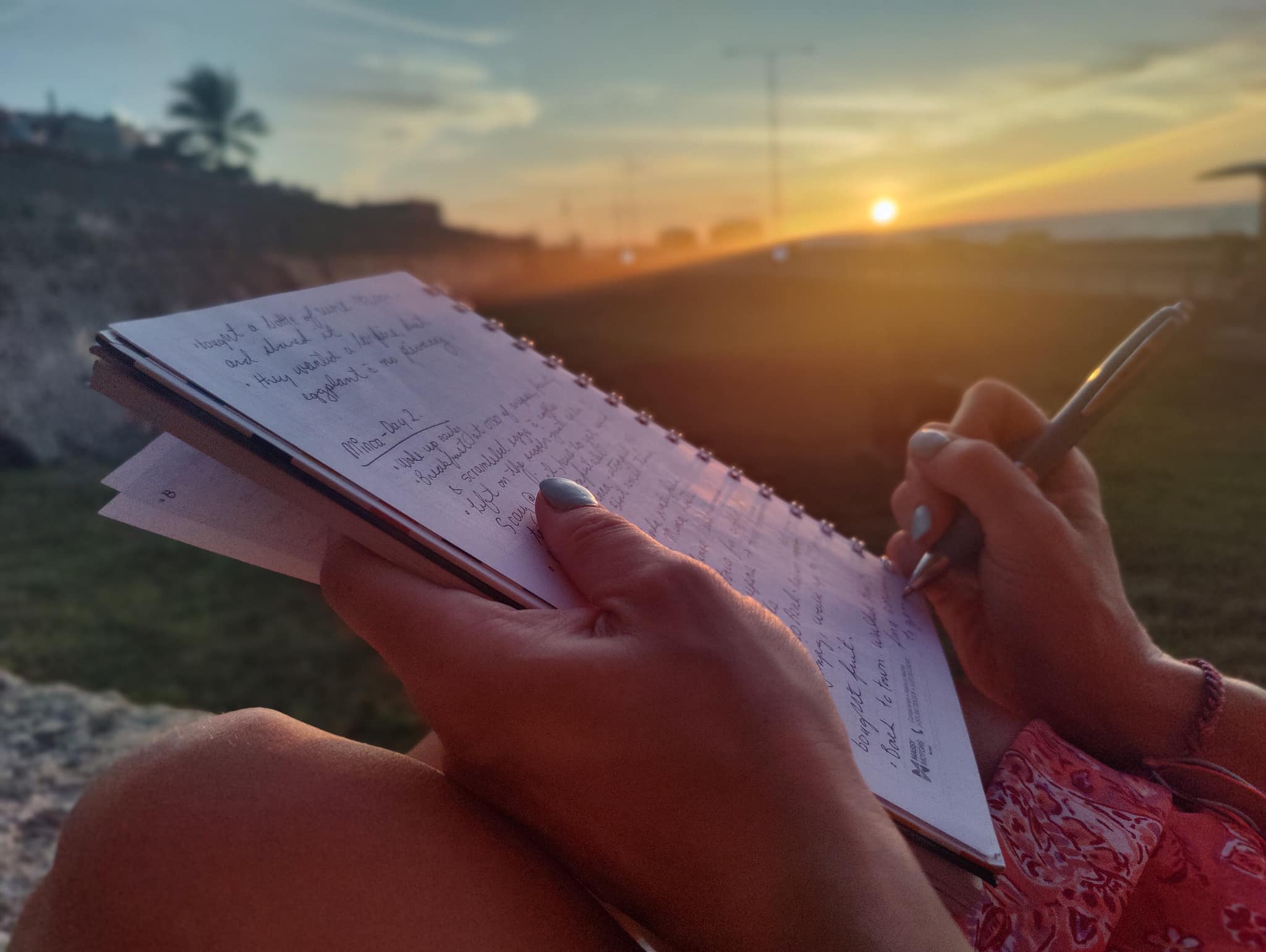
(But first, a little pre-amble: A year ago we were in El Salvador, and I had started to document our trip – see here for previous El Salvador posts: https://terynwarnke.com/category/el-salvador/
However, that was put on hold for a variety of reasons. But as I’m trying to pick things back up and get to posting again, let’s throwback 1 year in time… enjoy!)
The Monday morning traffic was a mess. There were so many vehicles trying to make their way into town that they had to take an outgoing lane (from our side of the highway) and turn it into an oncoming lane for cars, trucks full of people crammed into the back bed, industrial lorries, and zig-zagging motor bikes. It wasn’t quite on the level of the traffic found in Asia, and certainly not anywhere near the chaos that is Vietnam, but rather just an orderly jam of patient commuters.
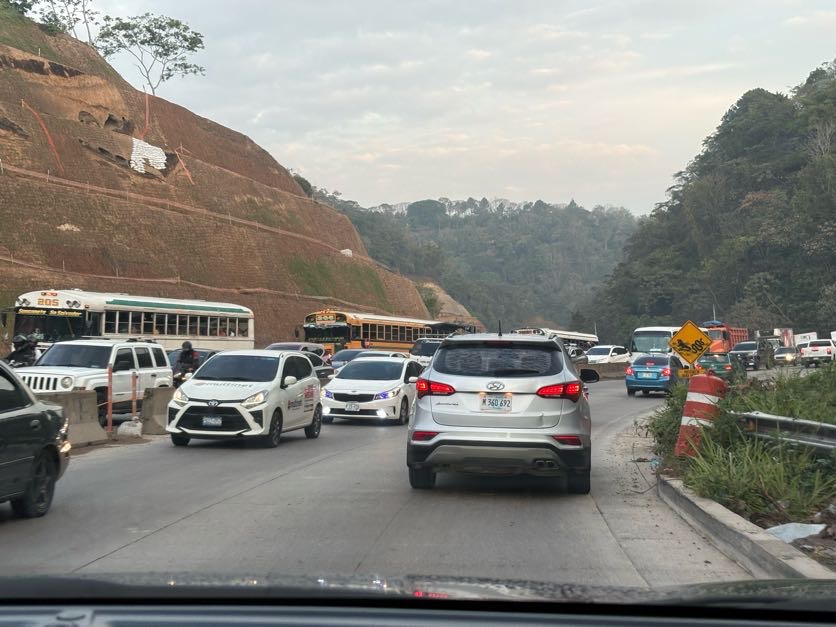
We crawled past signs warning us of snake and iguana crossings, followed by a sign of an animal with a long tail that I didn’t recognize, but that we were to be wary of as well. As we finally cleared the limits of San Salvador, the highway was smooth sailing from there on out.
The approach into Cerro Verde National Park (don’t miss the turn!) is not for those with a weak stomach or prone to car sickness. The road wound left and right, steep hairpin after steep hairpin, the rolling fog obscuring the road in many parts. It was lucky the road was devoid of any travelers making their way downhill, because it was nothing by tight quarters for the entire 12km climb.
Volcan Santa Ana is one of three volcanos within the Cerro Verde National Park, alongside Cerro Verde and Izalco. Overlooking Lago Coatepeque, Santa Ana last erupted in 2005 and is still active to this day, its walls providing nutritious soil for farmers that live along base while sulfurous fumes waft from its crater. (Our guide told us a story of how his professor at school had been hiking to the school one early morning and saw signs of it’s impending eruption. Alarmed, he ran down the volcano to alert the villagers of the incoming disaster. However, 30 of the 40 families that lived on the volcano-side at the time did not evacuate the area. Unfortunately, they did not survive the eruption and the professor, still to this day, lives with the guilt that he should have done more. Since that time, volcanologists have been predicting another awakening, but thus far the near boiling acidic crater lake just steams in wait.
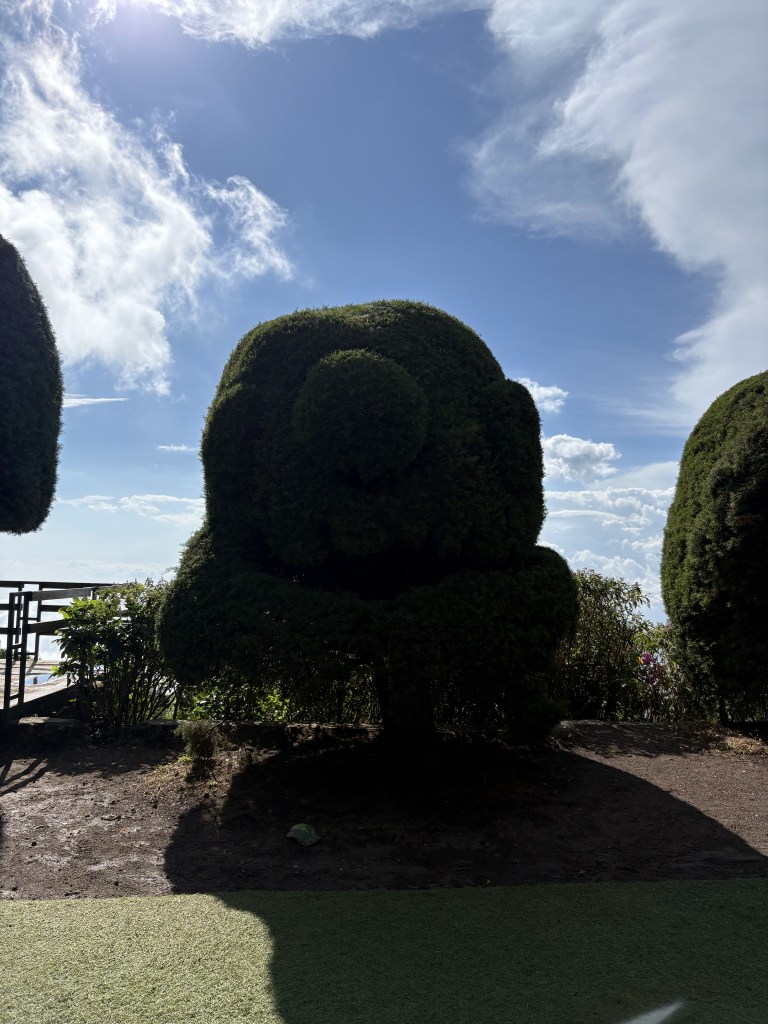
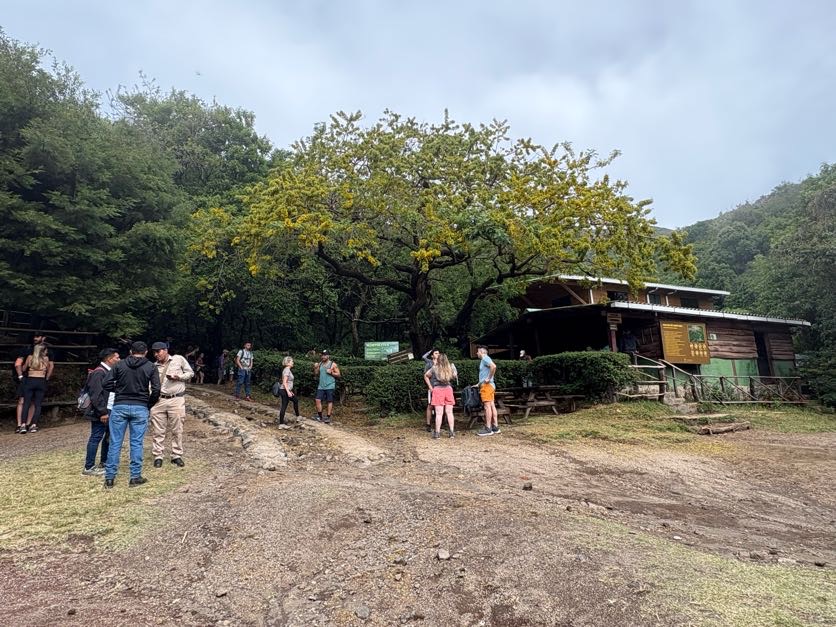
We arrived at the park gate early (something A is still getting used to now that he’s traveling with keener me), paid our entrance fee ($3 per foreigner, $2 per national, and $1 per vehicle), and completed one last hairpin turn to the parking lot, past a plethora of topiary – sculpted into endless animal shapes.
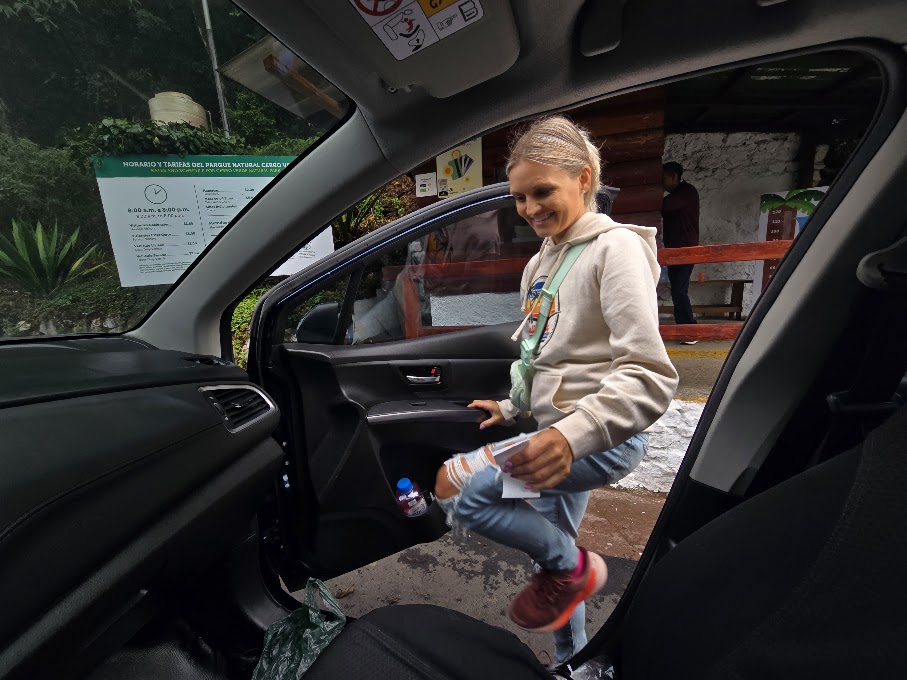
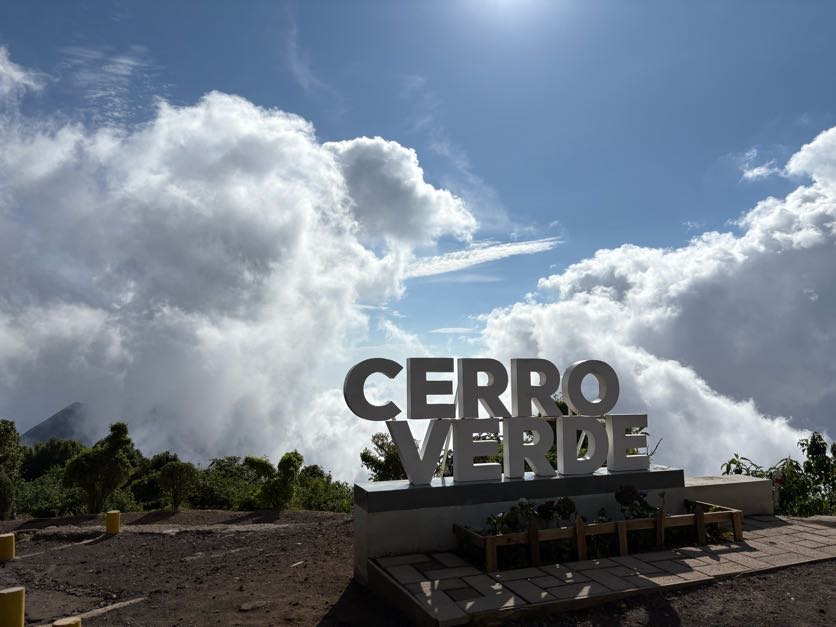
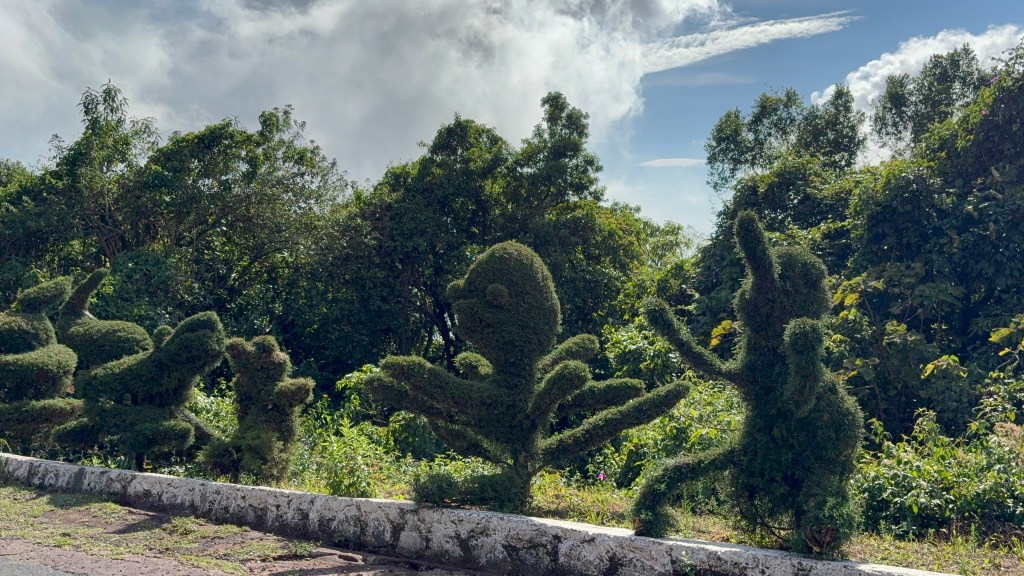
The staging area was perfectly set up for everything you could ever want.
Did you forget your morning coffee?
- They got it. 50 cents + $1 for added milk.
Did you forget snacks?
- They’ve got you covered with both sweet and salty options.
Need a hat?
- Check.
Sweater?
- Check
Bathroom facilities?
- They’re clean and well-tended to. (Just make sure you grab TP from the wall outside the stall or you’ll be sitting there until your girlfriend can sneak some in for you.)
Playground for the kids?
- Check.
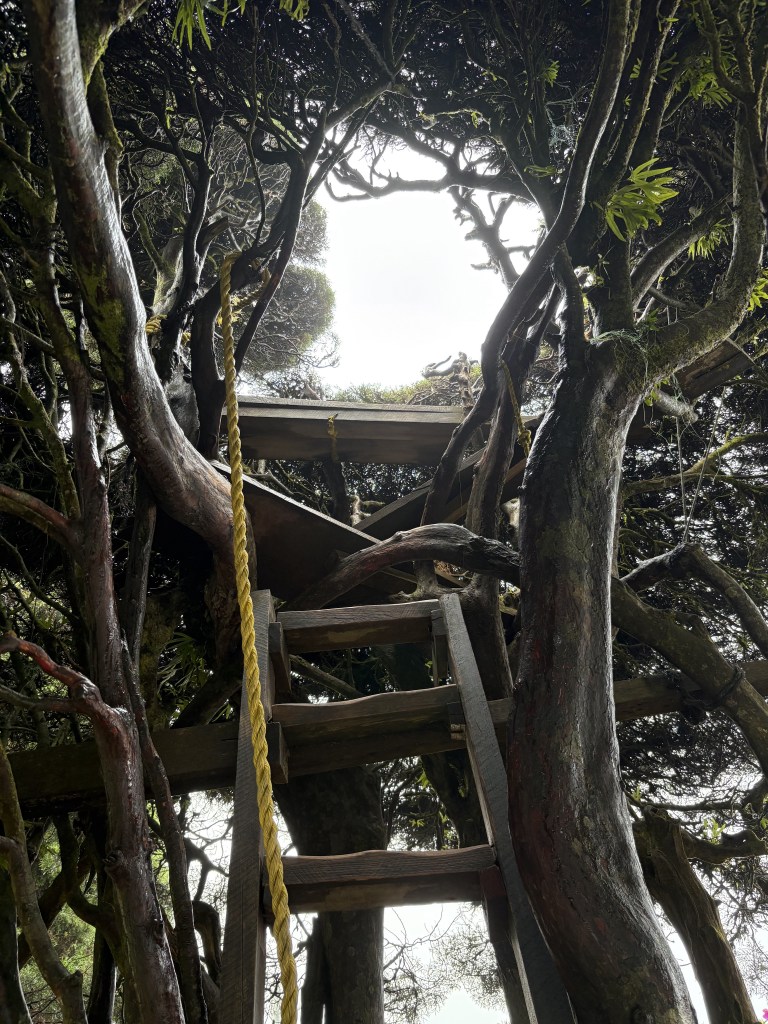
Treehouses crafted into animal sculptures with a viewing platform above it?
- I think the adults liked it more than their intended audience.
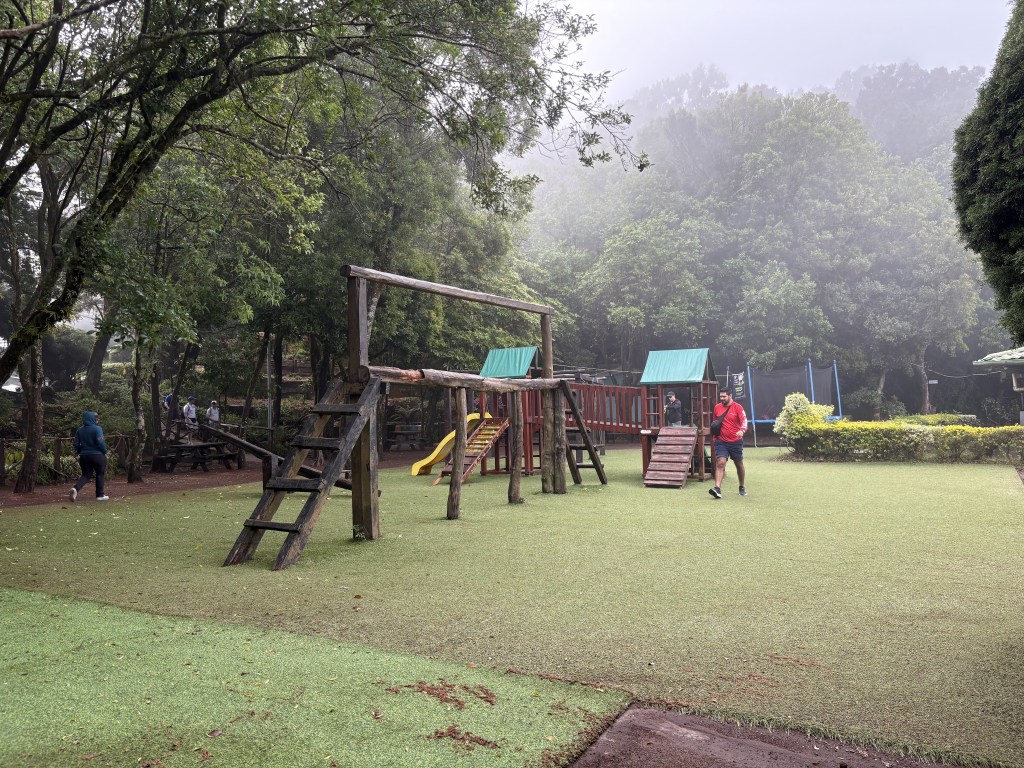
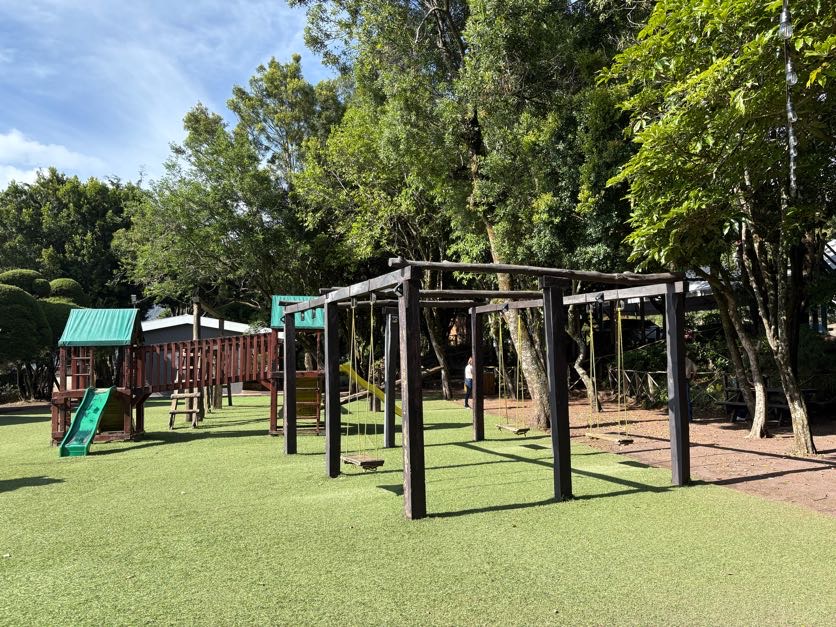
There was no need to pre-book a guide or your spot on the trek to the top. Everyone is welcome and there’s enough room and guides for everyone – they split you up into groups as you make the initial 50 cent payment, so make sure you stand with the people you’re planning to hike with (or take this as an opportunity to pretend you forgot something in the car and dip to the back of the line as you make an escape from that annoying stranger who latched on to you and won’t stop talking).
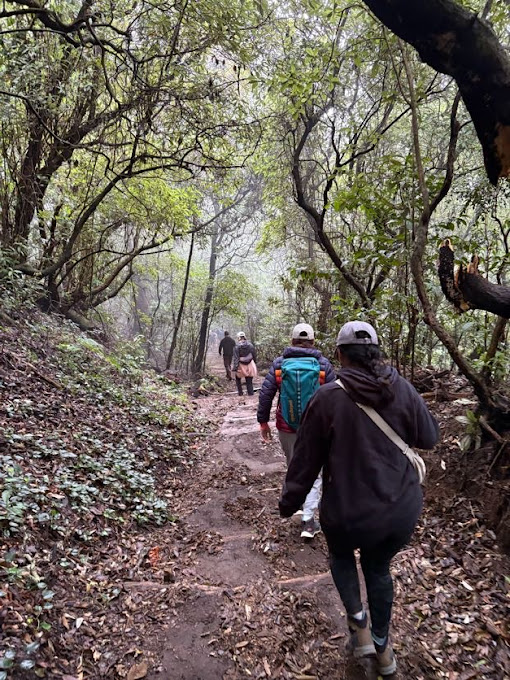
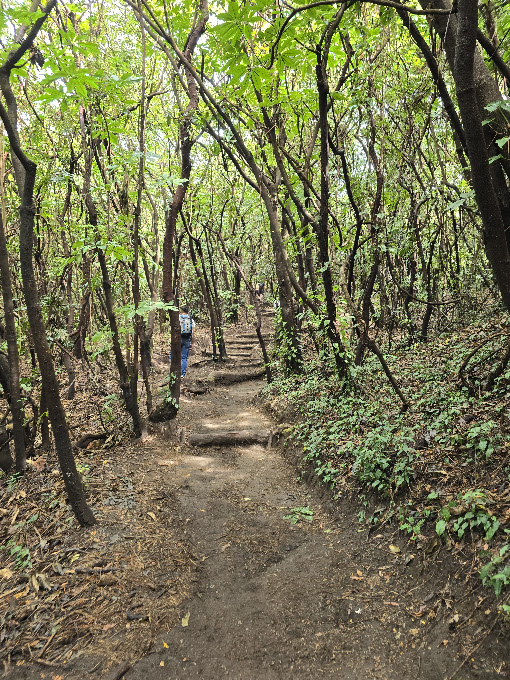
The hike itself is approximately 7km, round trip, and takes between 4-6 hours, depending on the speed of your group. (Or elapsed time was 5:25, including approximately 30 mins at the crater). Overall, it’s not a difficult hike. But then again, it’s not terribly easy either. There are lots of roots and stairs, (both man-made and natural), and some steep sections and areas of unstable ground that can be quite slippery. But we saw people of all ages along the route – from school-aged to those of advanced years.
Although there are the standard safety precautions they warn you about – it’s not recommended the hike is done by those with high blood pressure, cardiac concerns, or limiting respiratory and joint issues – it should also be noted that there are 19 different species of snakes along the route (3 of which are poisonous). Sooo… there’s that.
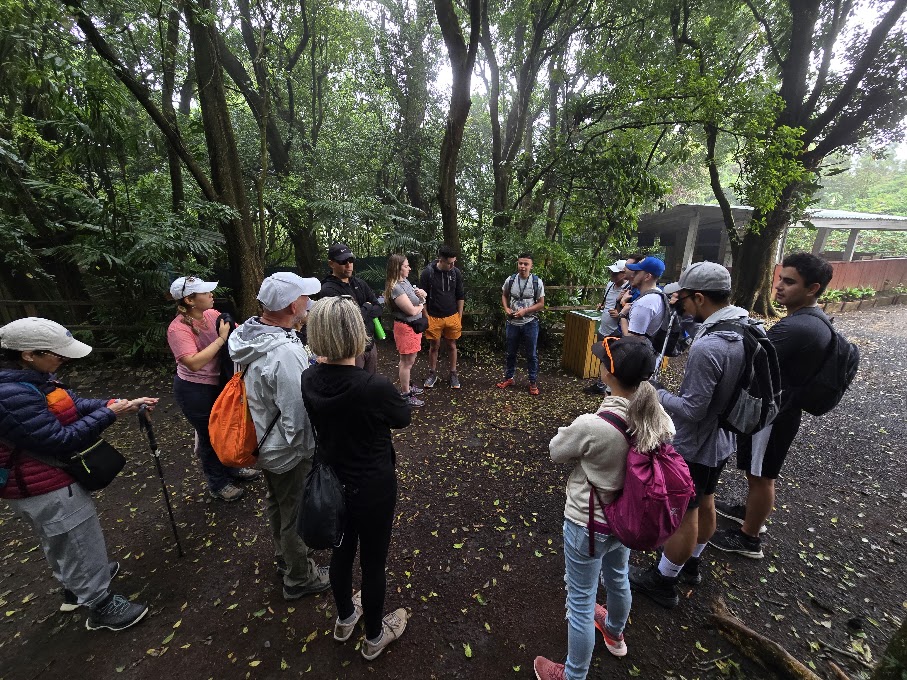
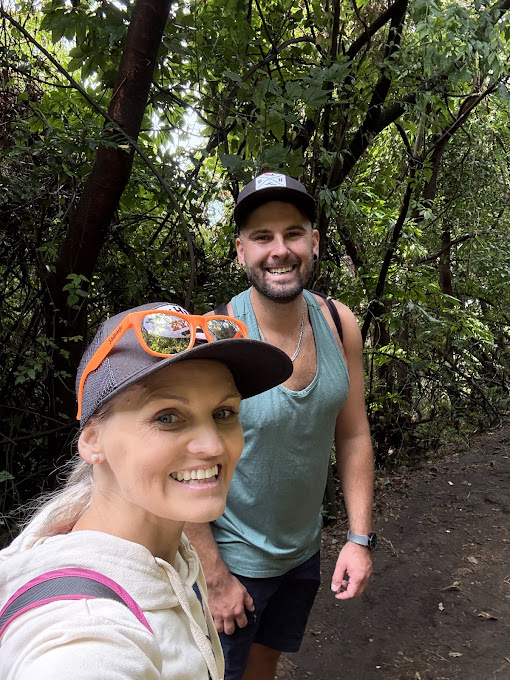
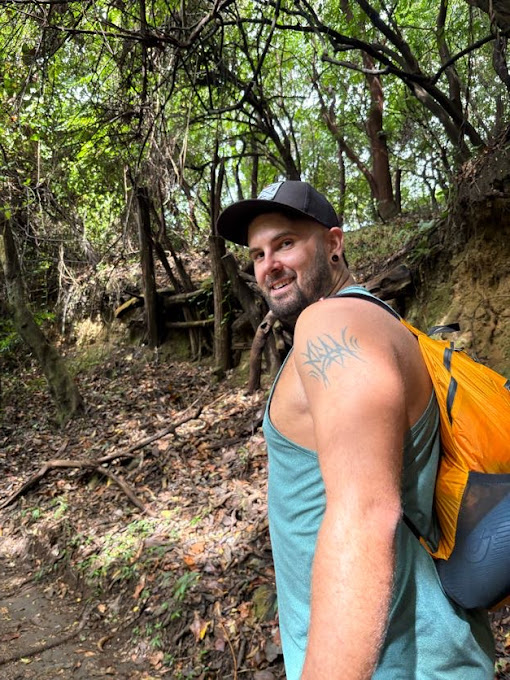
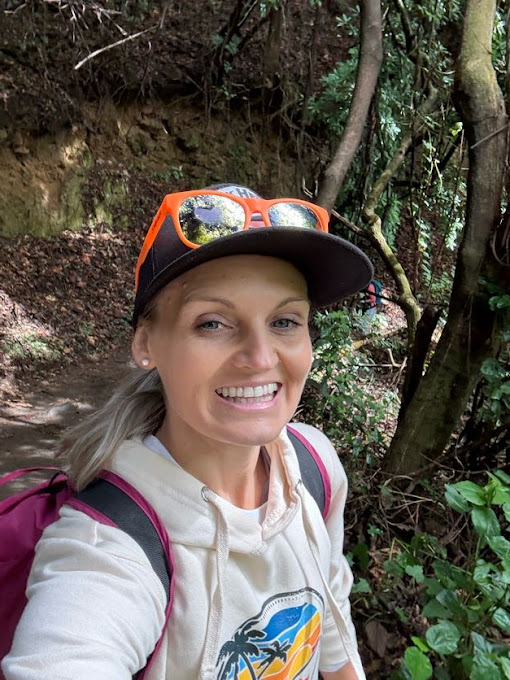
We were trekking in a group of 12 (including our guide), with people from the States, Puerto Rico, and the Dominican Republic. The one couple that we spent the most time with, fascinated by their life story and all their traveling adventures, were named Jay and Jill Campbell. And if you’re a cruiser, or followed the news back in March/April 2024, you’ve probably heard of them. They were part of a group of 9 people (though the news stories say 8) who were left on the remote African island of Sao Tome after being refused entry back on to their cruise ship due to a mishap that resulted in them returning past the posted all-aboard time. We had a lot of time on the hike and were able to hear the entire store from start to finish with all the details – including the dirty details that the cruise line failed to acknowledge and how the media warped their story and misrepresented the narrative to how they wanted it to seem versus what really happened (If you’re interested, definitely google it).
The first part of the Santa Ana hike was fairly tame with loads of shade, a lot of downhill through the jungle, and mild uphills into the forest. You really needed to keep your eyes on the ground as you guided your feet through the dead, fallen leaves (watching for snakes and spiders that may be hiding underneath) and the many roots attempting to trip you up. Once we hit the second staging area, where you pay an additional $3 USD, there were more bathroom facilities and a last snack/drink/souvenir stand. Then the uphill climb really began. It started through the forest, then quickly turned dusty and rocky as the ascent became more tedious. As the trees thinned out and the view opened up, we found ourselves not only part way up our volcano, but with a fantastic view of the other volcanos in the distance, nestled amongst large stretches of undulating green hills.
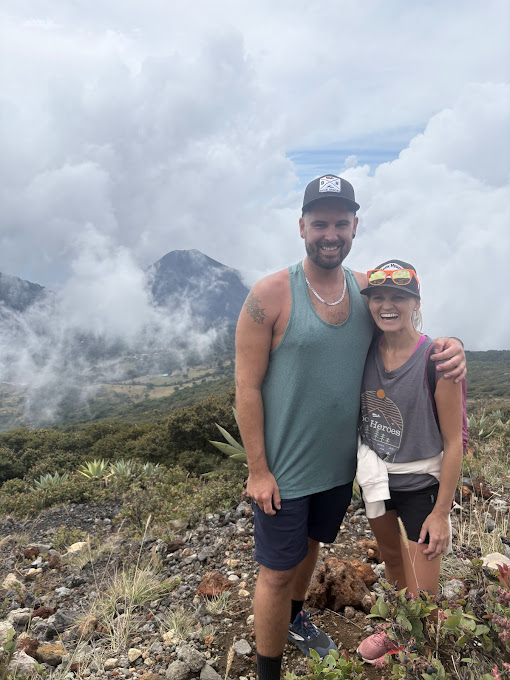
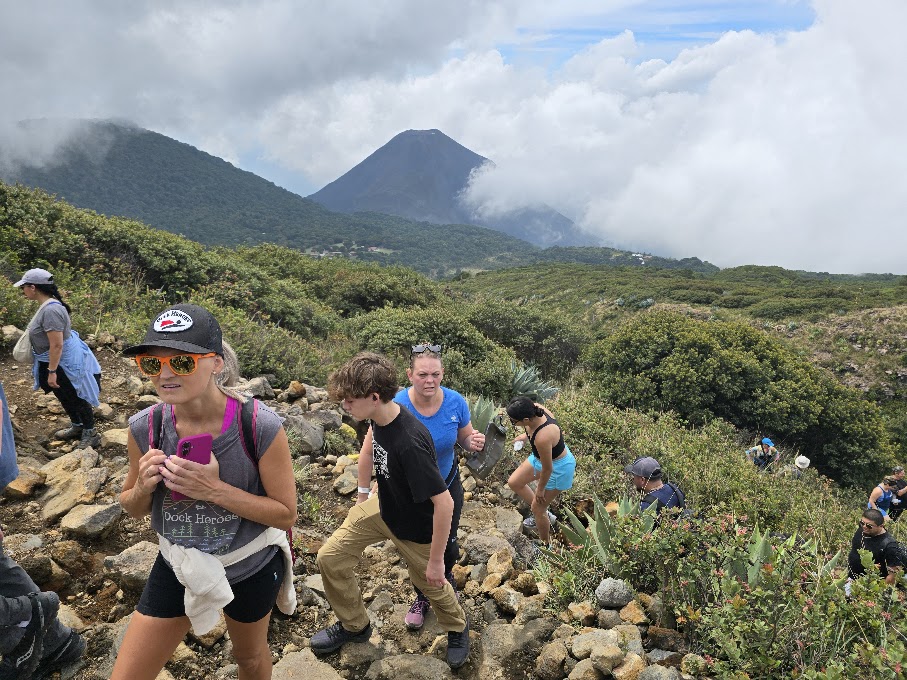
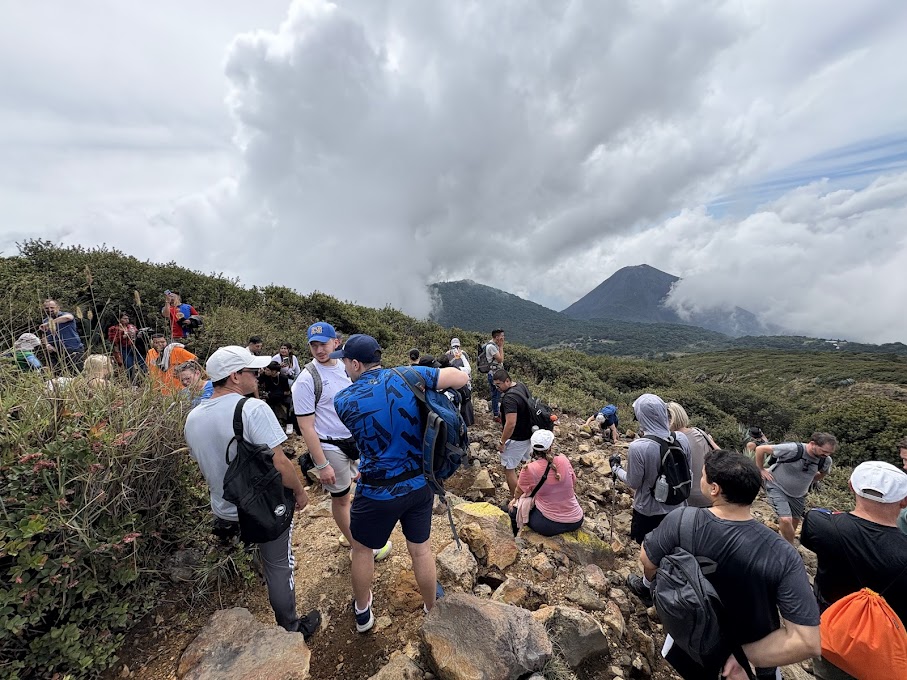
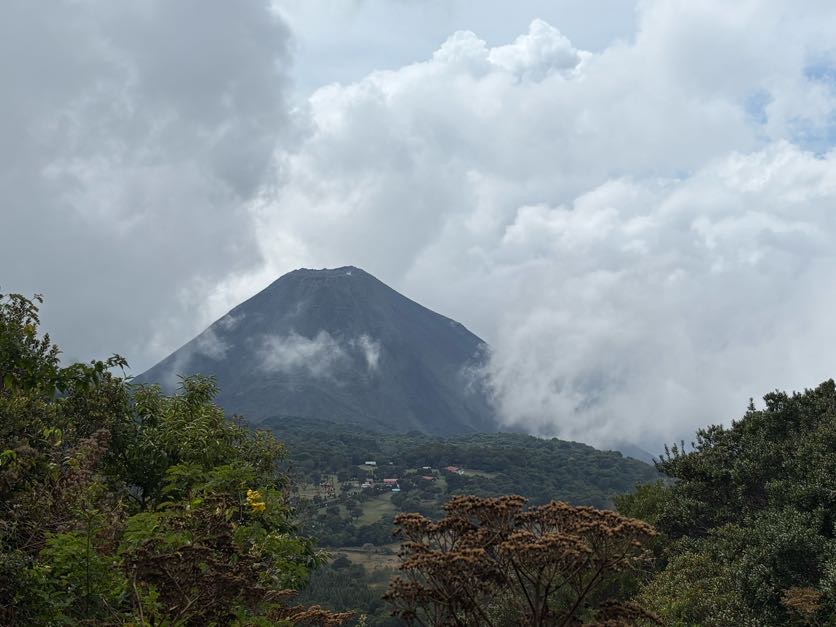
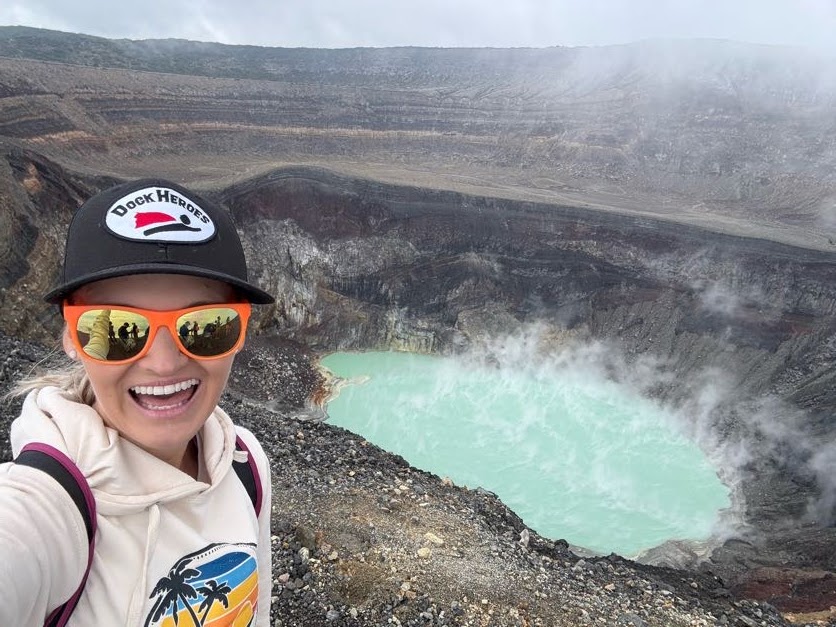
As we neared the crater, the wind began to pick up, necessitating the addition of pants and hoodies (which had been quickly shed soon after leaving the chill of the early morning staging area). It was a view I’d been anxious to see as it’s one of the most iconic images of El Salvador (as seen from the eyes of social media). And it didn’t disappoint. The turquoise blue water in the center of layered yellows, oranges, reds, and grays within the crater depths was a sight to be seen – from a distance though, as there were no railings or safety precautions in place, save for wide-spaced, waist-high, brown stakes near the edge (in some places) and a couple police officers leaning against rocks.
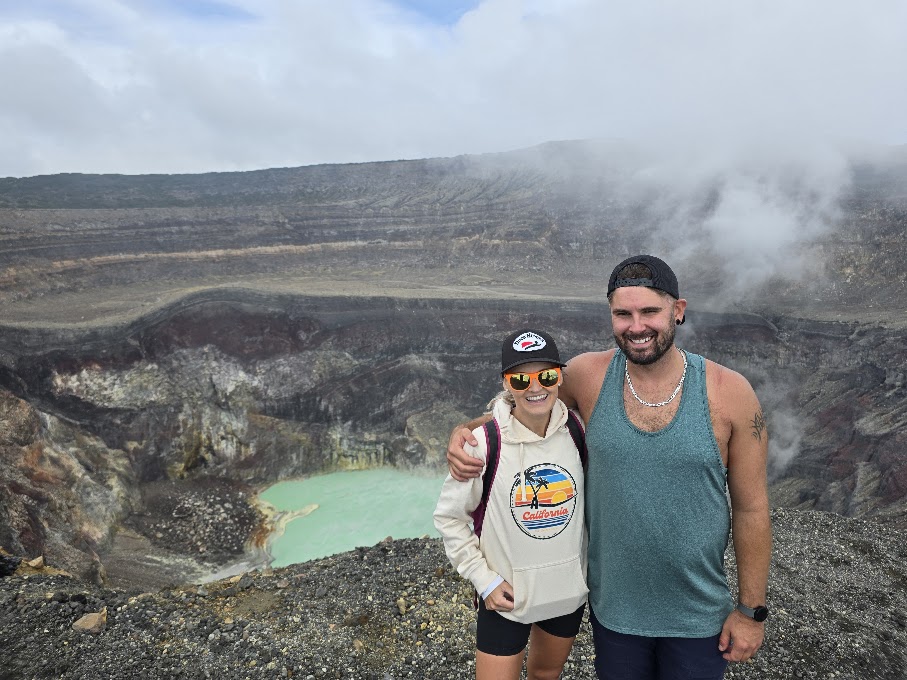
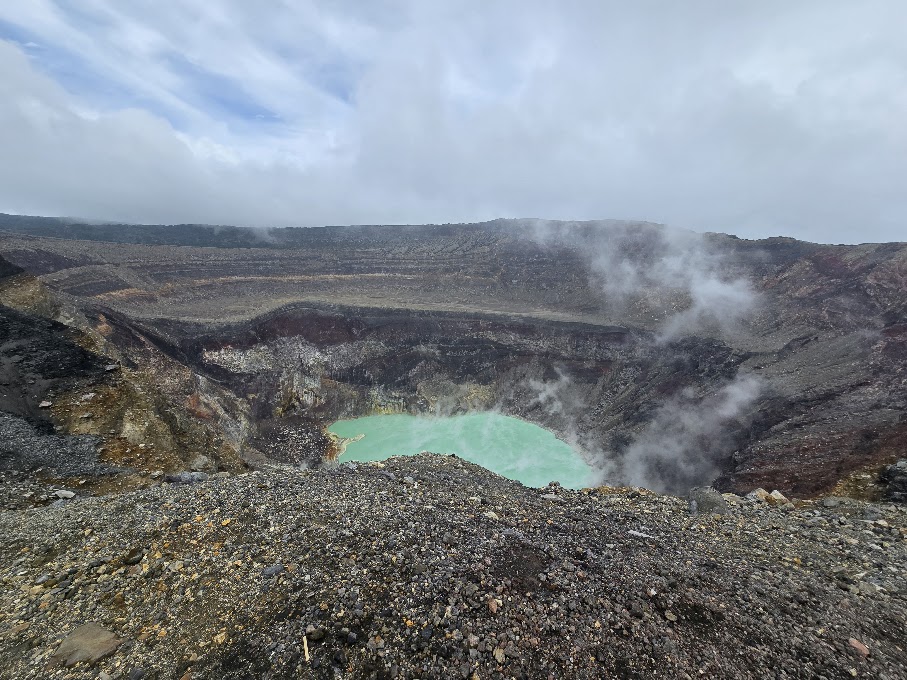
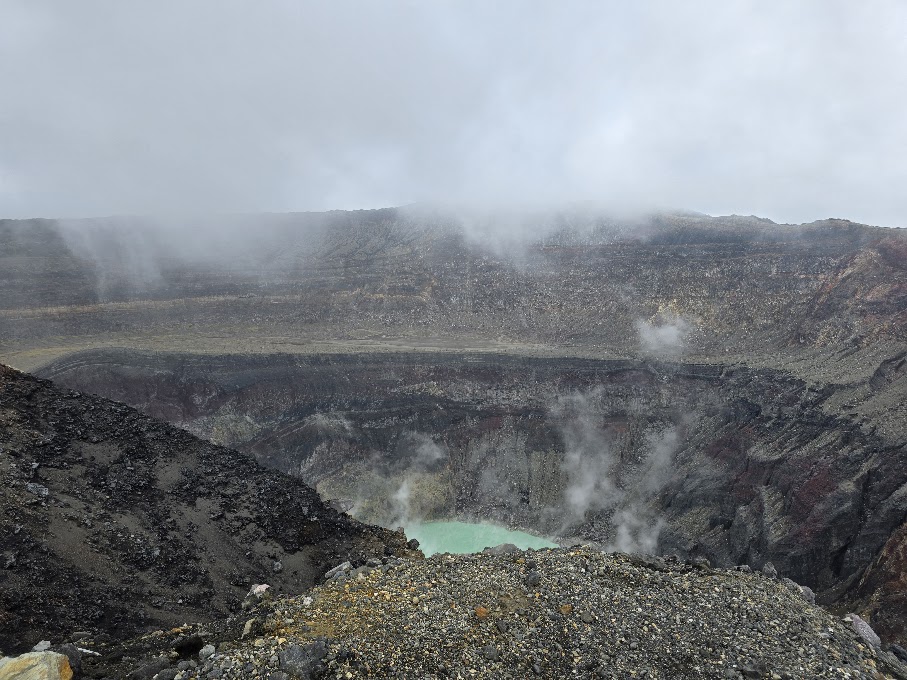
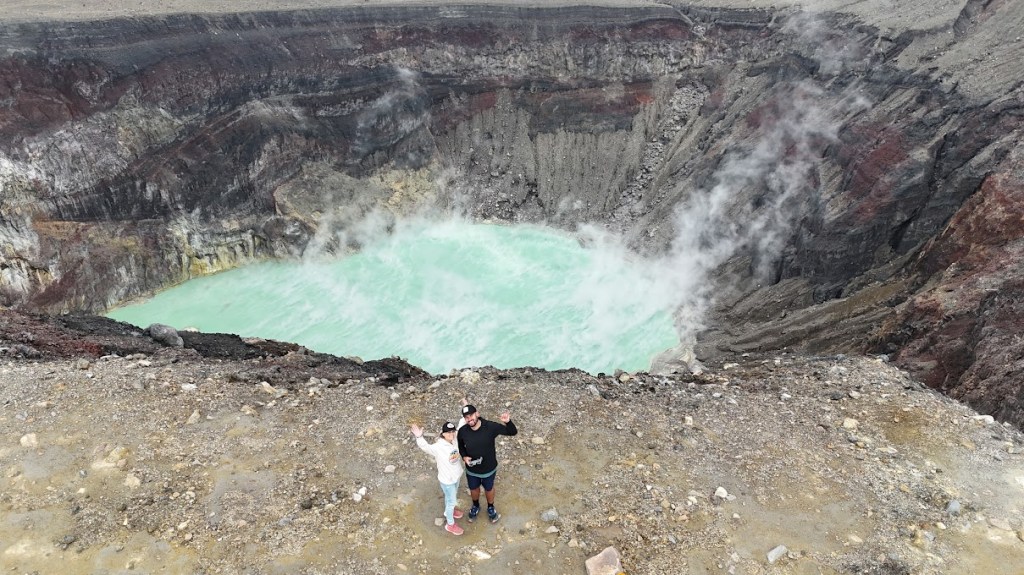
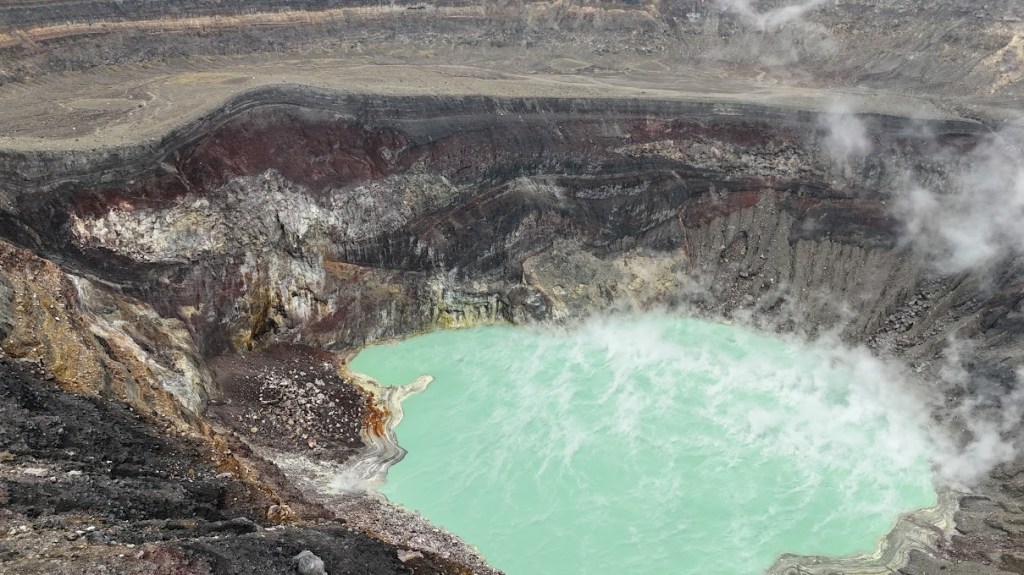
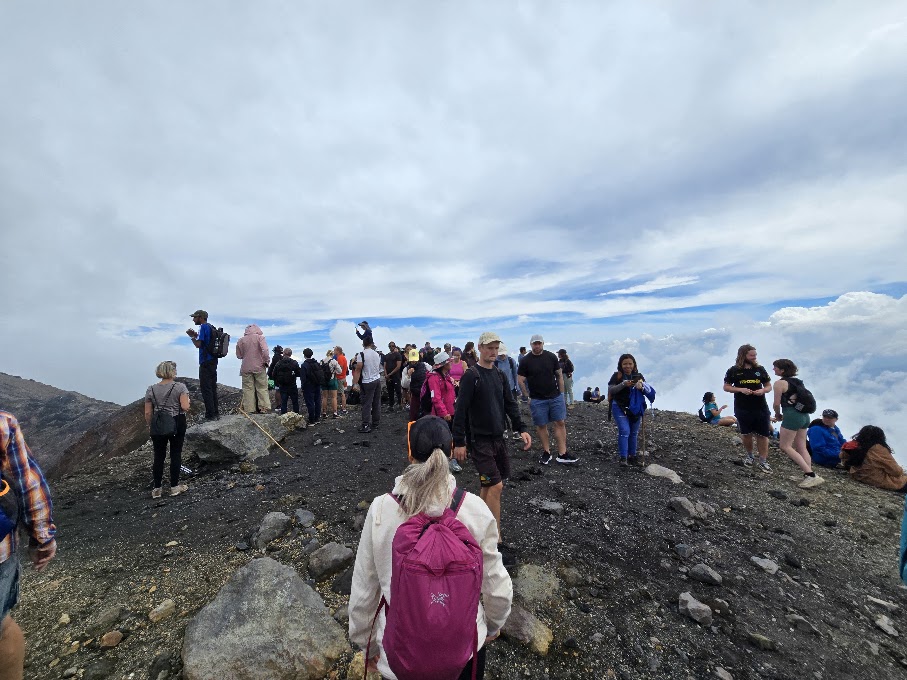
Due to the sulfur fumes, the maximum recommended time spent at the crater rim is 30 minutes. So, cue the quick succession of photos and drone shots, desperately tying to take in and capture as much as you could before protocol required you to begin your descent.
Eager to play with his drone, A set up his gear and off little dronie went, high up into the windy sky to capture what we couldn’t see from our vantage point. Although we were still learning, he managed some epic shots and videos from atop Santa Ana. But honestly, nothing quite does it justice except to stand on the edge yourself, timidly looking over at the magnificent force of nature just below you, hearing the howling wind, smelling the pungent fumes, and feeling so small and in awe of nature and life itself. It’s incredible.
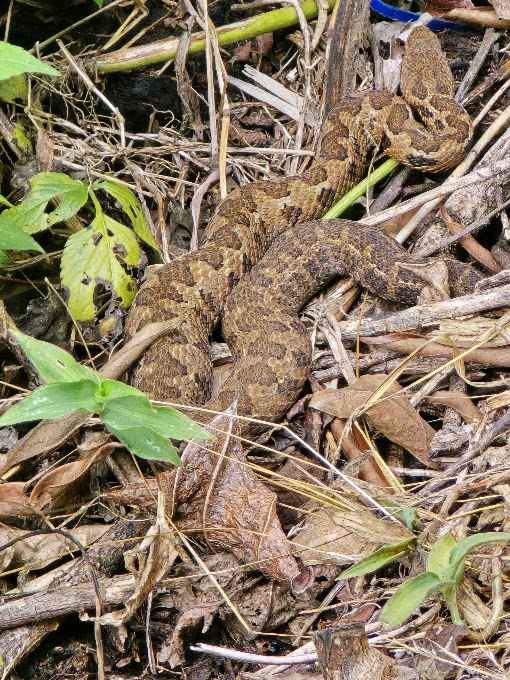
The hike back down was slower than we wanted it to be, getting stuck behind a few slow-moving groups, but it also gave us a chance to actually stop, look around, and admire the views. It also brought rule-following to the forefront of our minds when we happened to come across a poisonous snake, curled up in near perfect camoflague on the trail’s edge. One step to the left and we would have been done for folks! This is why you stay on the marked trail and don’t venture off (even for a wee)! (And in cases when nature calls – answer it back right smack dab in the middle of the trail while your partner stands guard and plays distraction for you.)
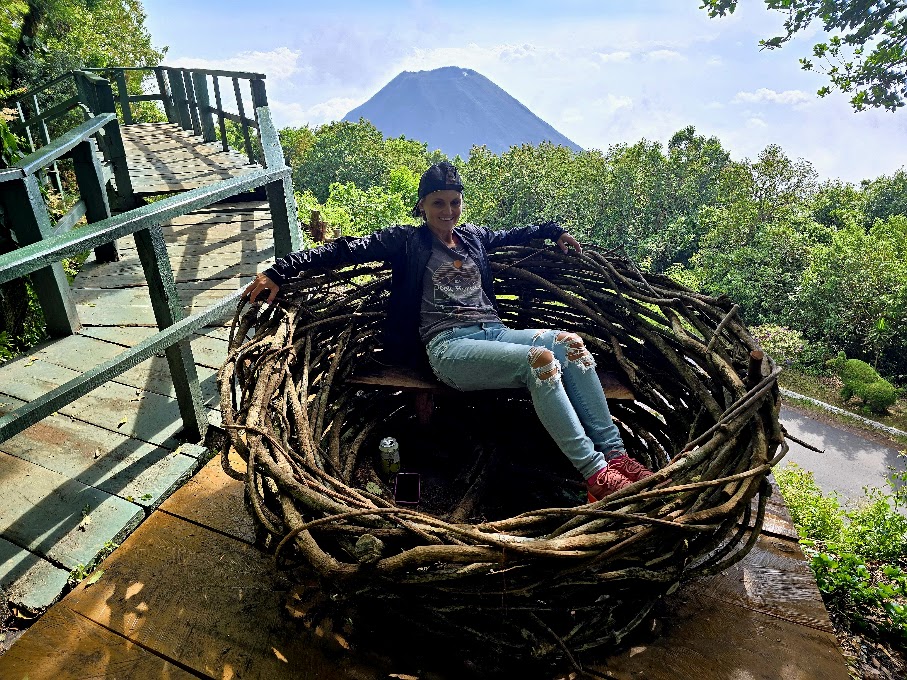
After we were safely down the mountain and had bid farewell to our new friends, we stopped for a celebratory beer overlooking Cerro Verde from a bird’s nest. (Pretty cozy, actually). Then it was off to Lago Coatepeque for a few days of lake life.
Bien viaje!



Leave a Reply