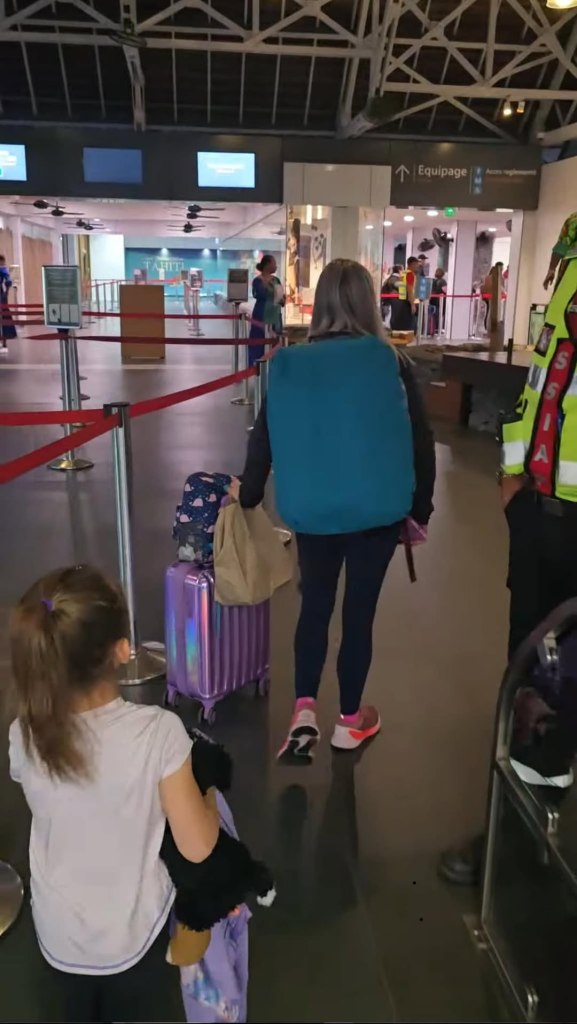
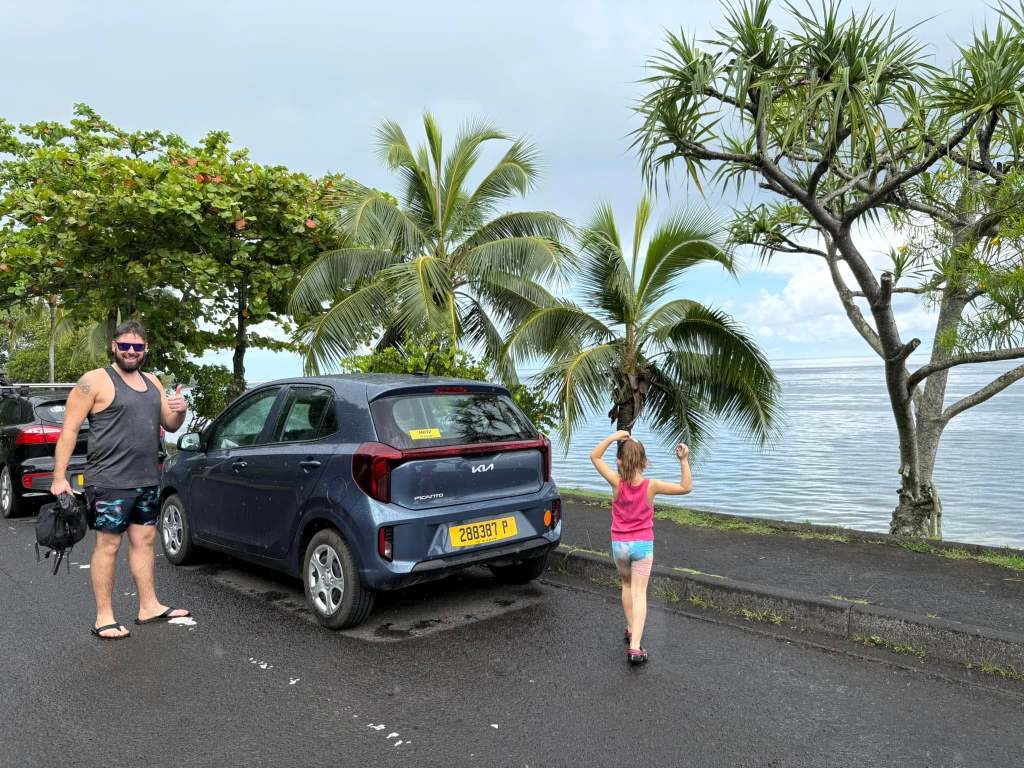
We greeted Tahiti with our blurry-eyed smiles as we walked down the plane stairs and on to the tarmac. Tahiti greeted us in return with its hot, humid air, and hip-shaking island beats. We danced our way through customs and into the duty free shop to collect our half-price liquor (a tip A learned prior to arrival – which I can indeed recommend and attest to). Then we picked up our rental car – a cute little Kia Picanto barely big enough to hold our three carry-on bags – and set off towards downtown Pape’ete.
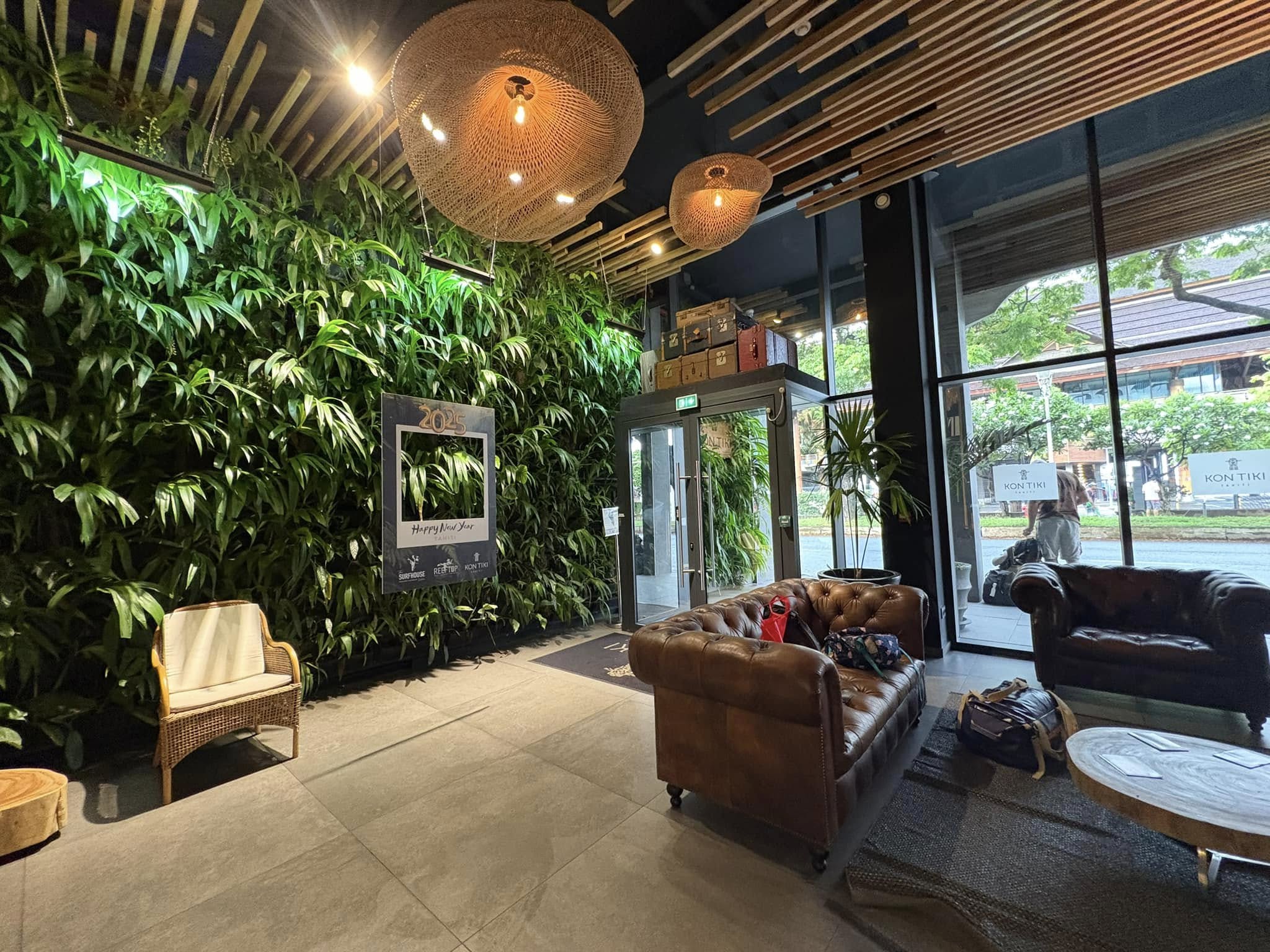
It was a quick drive from the airport in Fa’a to Pape’ete, but considering it takes about 1.5 hours to drive around the entire island, it wasn’t surprising. We were staying at the Kon Tiki boutique hotel, which we learned had newly opened in the last year, and was located directly across from the ferry port.
Now, I should probably preface this blog (and all my others about this trip), by saying that we did zero pre-booking research. And when I say none, I truly mean that. In fact, we weren’t even planning to go to the French Polynesia. The original on-a-whim plan was to go to New Zealand, rent a campervan, and van life our way around the island. But when we were booking our flight to NZ, we happened to find a flight that connected through Tahiti. And in that moment my exact thought was:
“Whoa! Well, if a flight to NZ connects through Tahiti, then a flight directly to Tahiti must be cheaper! Why don’t we just go to Tahiti?!”
And moments later, after that hypothesis was confirmed, we scrapped the idea of NZ and booked Tahiti instead.
And we thought nothing more of it, assuming (wrongfully) that when it came time to booking accommodations that we’d be able to find some cheap hostel or hotel or local pension (guesthouse) to stay in. We thought we’d be able to get by on a shoestring. But when we finally got around to booking anything more than flights, two weeks prior to leaving, we were left second-guessing our decision to go at all.
Everything was proving to be more than even a little expensive. Our hopes and dreams of an overwater bungalow were squashed when all options turned up at greater than $1000 CDN…. per night. In fact, everything was turning up around $300-$400 CDN per night, with the rarities being those outliers falling sub-$200 CDN.
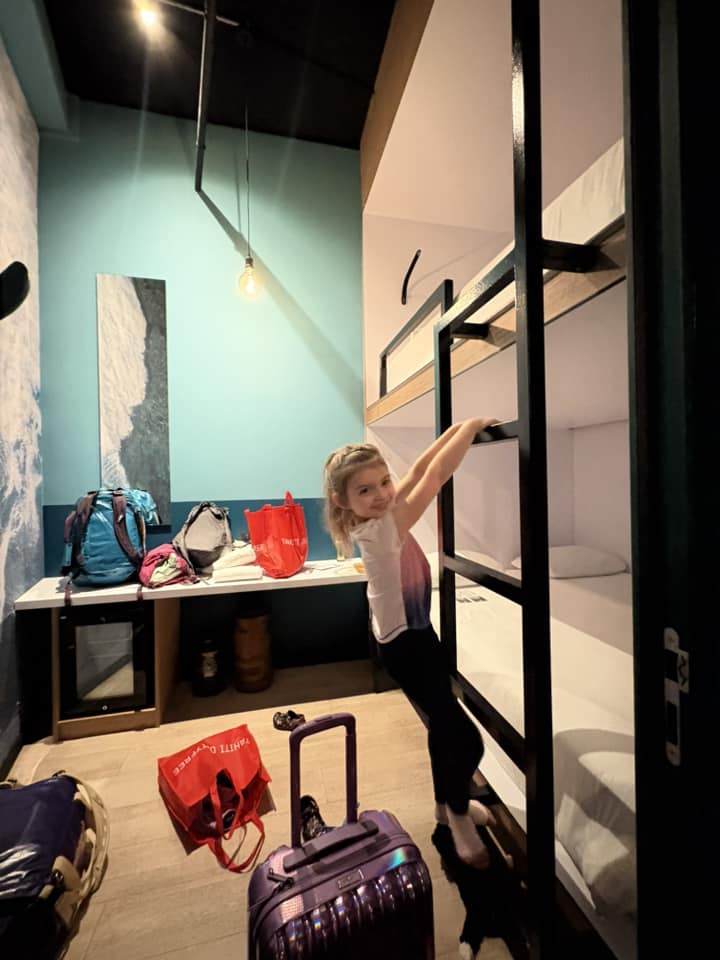
We snatched up our “boutique hotel” for $150. A simple, window-less room with a queen-sized bunk bed, mini fridge, a shelf, and shared bathrooms with the rest of the floor. It was cute though, with a large surfer wall painting, comfy beds, and customizable RBG LED strip lights around the beds that M loved to play with. There was also a rooftop bar (which, yes, was one of the main reasons I was drawn to it in the first place). Sadly, though, we missed making our way to the top due to its bar-like opening hours (4pm -1am… and kids are only allowed from 4-7pm). But no matter. We had a car and now only one full day to explore the island before heading across the water to the island of Moorea.
After an expensive grocery stock-up at the Carrefour (and opting for a breakfast of still-warm baguettes and cheese), we set out to drive the sole island road that ran around the entire island of Tahiti-Nui (the fish’s head) and part of Tahiti-Iti (the fish’s tail). To me, Tahiti looks like a fish… or a figure eight… and once you see it, you can’t unsee it.
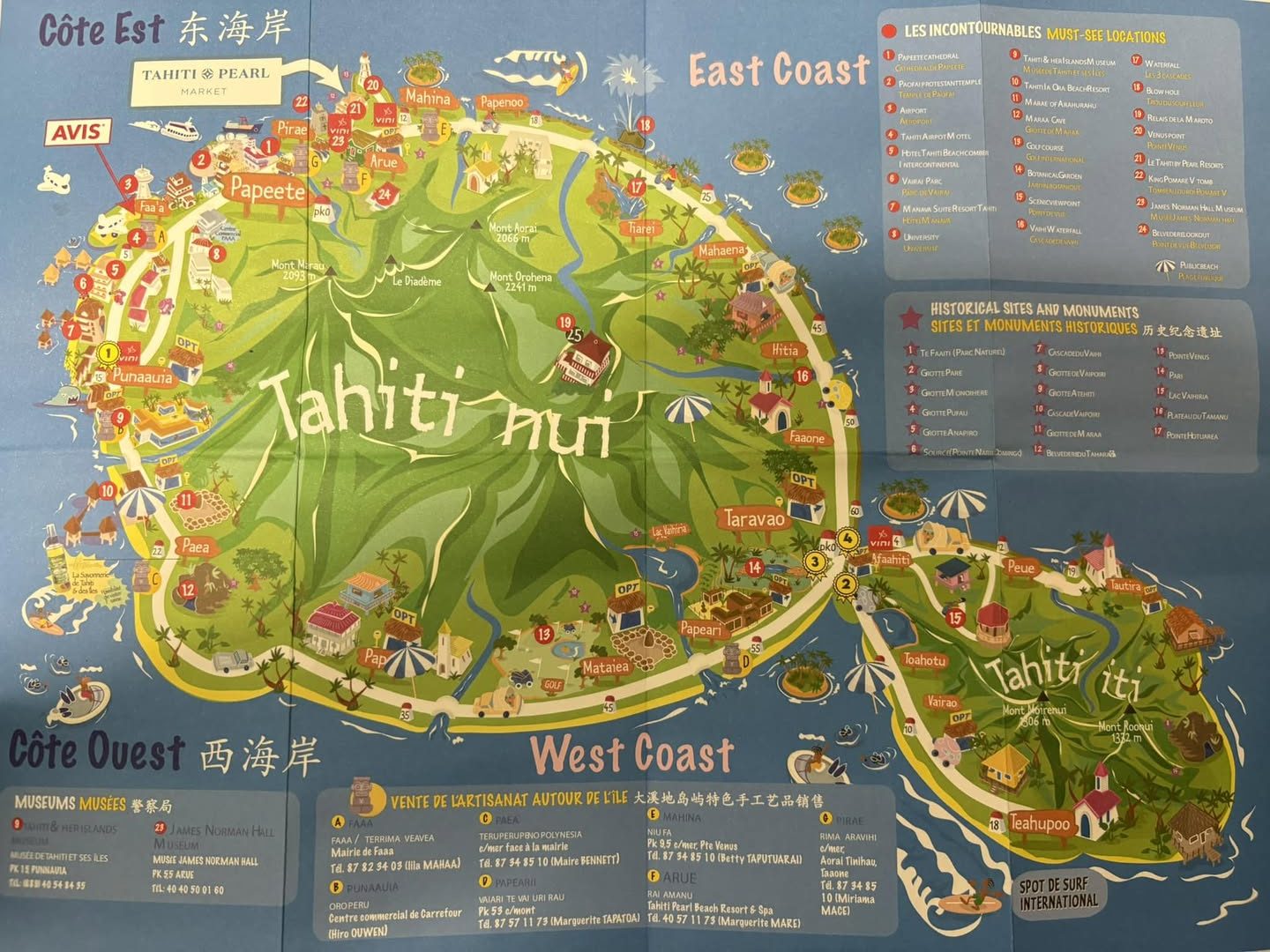
We opted to drive counter-clockwise for no real reason other than that’s the way we were facing when we left the hotel. There are lots of things to do around the island, and we tried to stop at as many of these sights as we could. But there were numerous options and we only had so much daylight.
In the interest of sparing you all the details, here were our top 3 choices out of the places we ventured to.
Top 3 Adventure Spots outside of Pape’ete
- Mara’a Cave
Mara’a Cave is a place of beauty, just off the coastal highway, 28km (or about a 35 minute drive) from Pape’ete. There’s a small little pull off on the right side of the highway, right beside the water. There’s no beach there, but it was our first real chance to take in the beauty of the ocean. Then, it was a hop, skip, and a jump across the road towards fern gully. Tall, majestic trees, bunches of bamboo clicking in the wind, lush jungle greens, and chickens. That’s what’s found in the lead up to the these three natural caves carved into the mountainous terrain. I was expecting it to be a bit of a hike, because you can’t really see anything from the road. But as we stepped on to the path and rounded the corner, we were surprised to find the caves were no more than a few meters away.
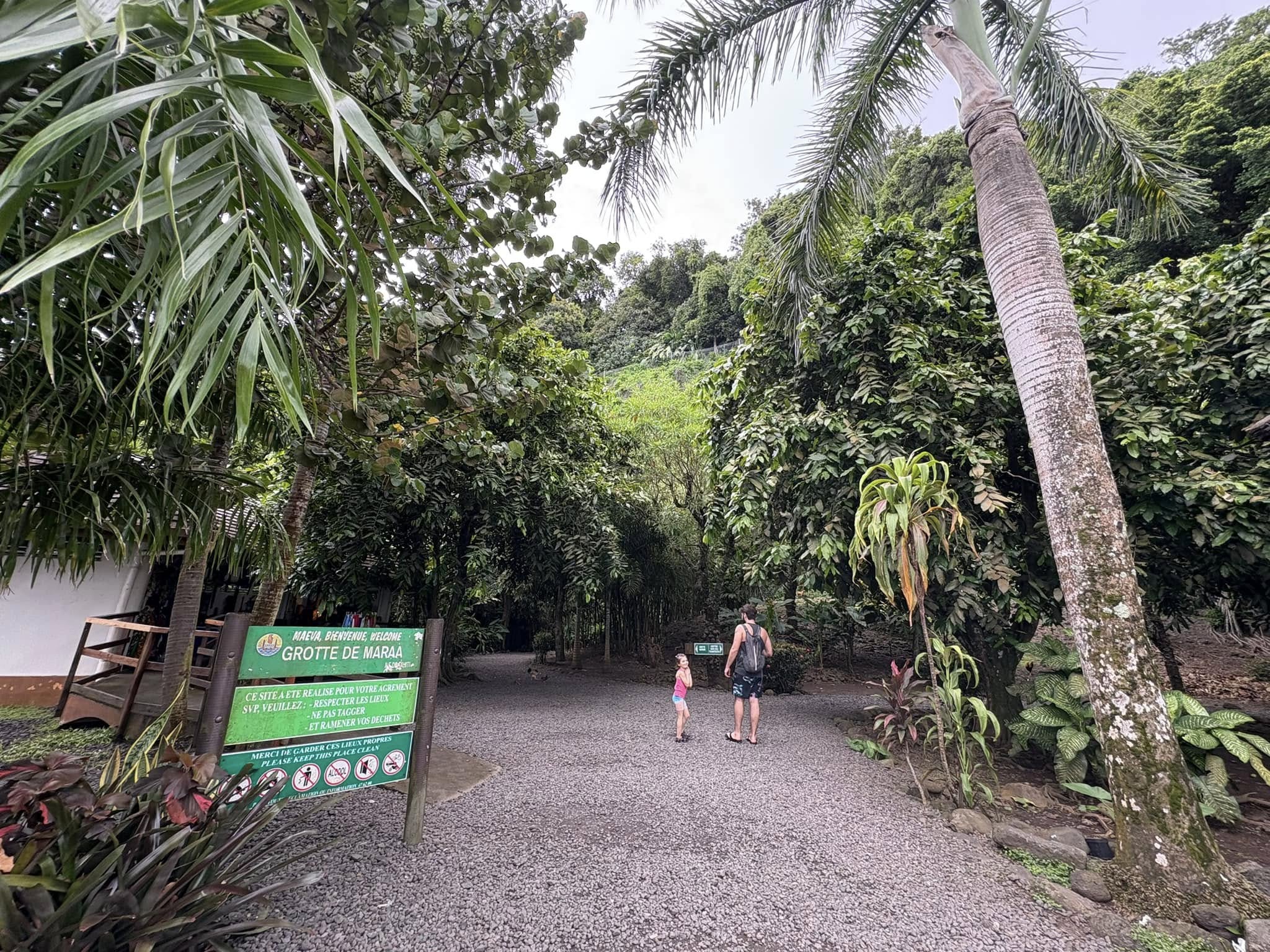
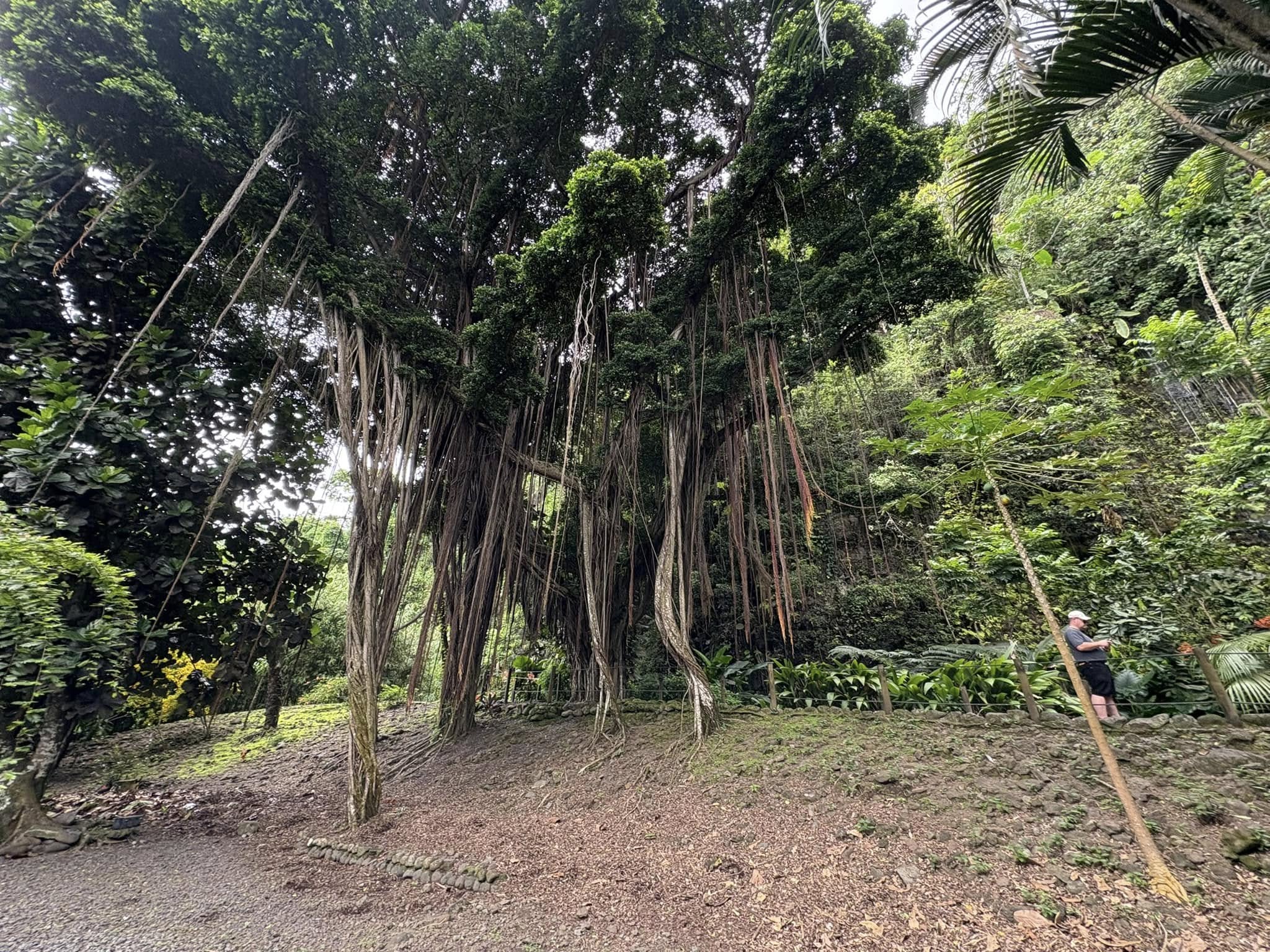
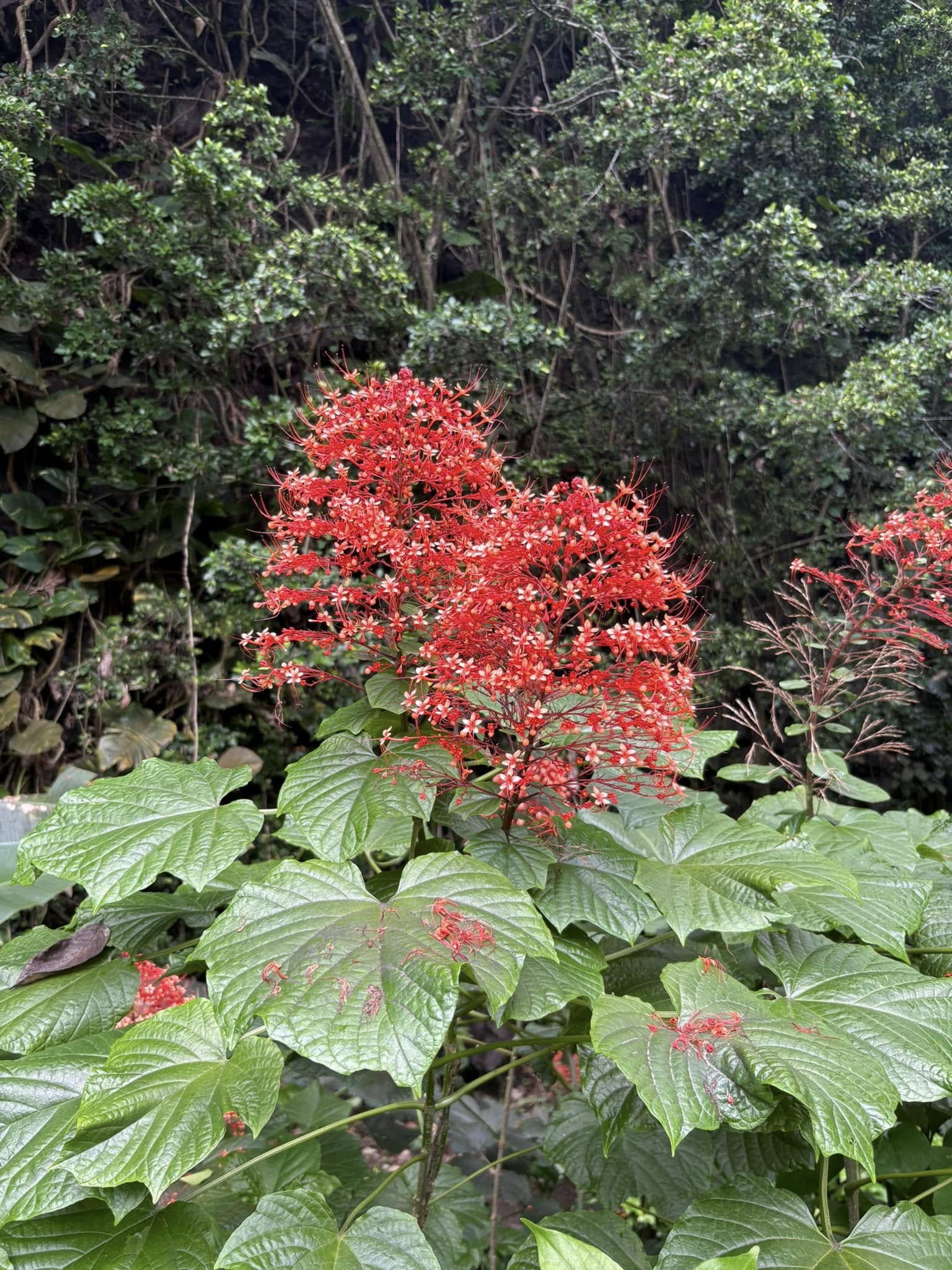
When we were there, one of the caves was a “dry” cave. It was muddy (since it’s rainy season and it was raining off and on that day) and to me it was giving off an air of “admire me from afar.” A, however, didn’t pick up on that. Instead, off went his shoes and into the mud he went walking, much to my surprise (although I’m really not sure why these things surprise me anymore). He found a couple pairs of abandoned flip flops that had been taken hostage by the mud, but not much else. We’d read one of the caves was swimmable, so off we went along the trail to the left (the trail to another cave on the right was closed – I’m unsure why).
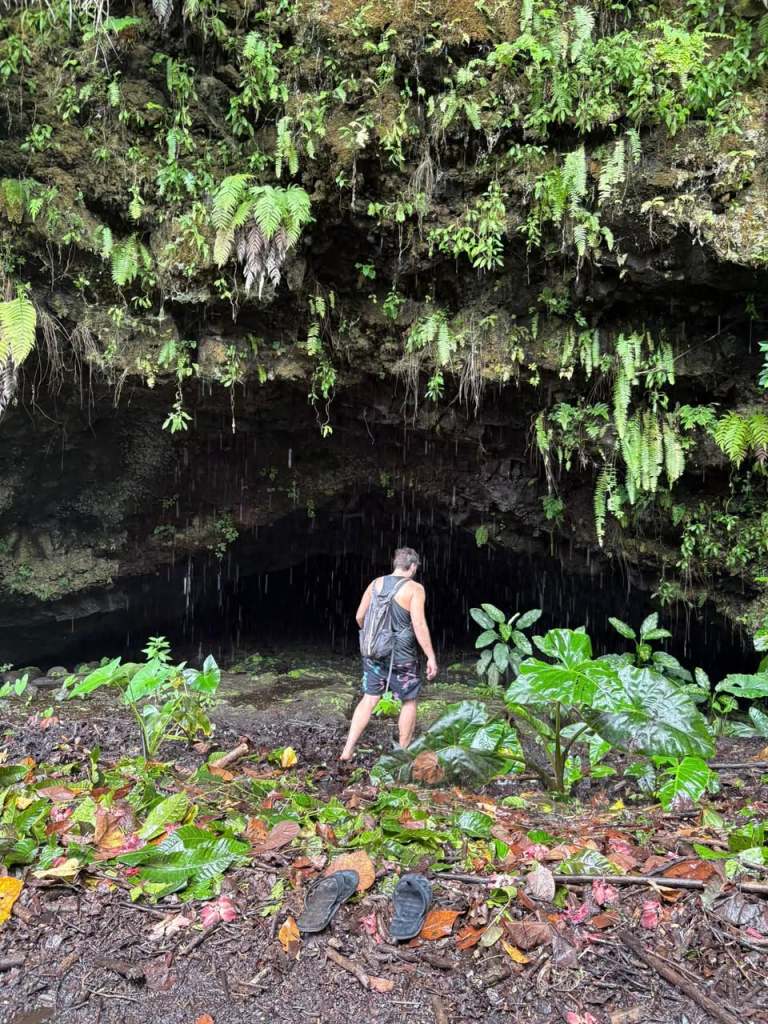
And then just around another corner we were greeted by a large open-mouthed cave of wonder. The water was dark, but crystal clear (if that makes sense). At the tip of the cave you could see fish swimming around and a rocky bottom below, but as the cave grew deeper it got darker, somehow begging A to enter. And so, he did. M and I did not. He threw his clothes onto a rock and dove into it’s depths. M and I watched from shore, admiring the soft pings of dripping water from above, and the vibrant plant life that surrounded us.
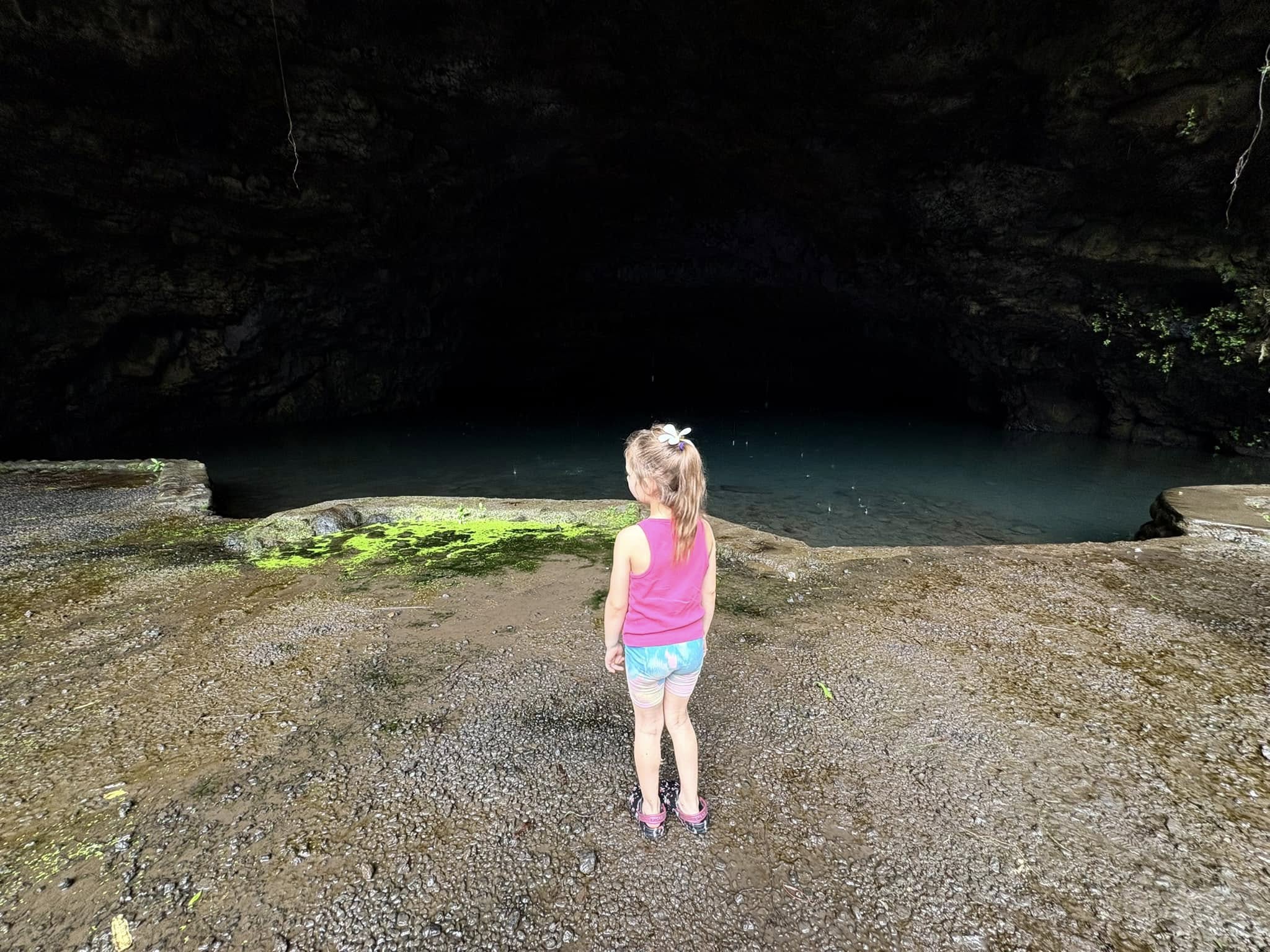
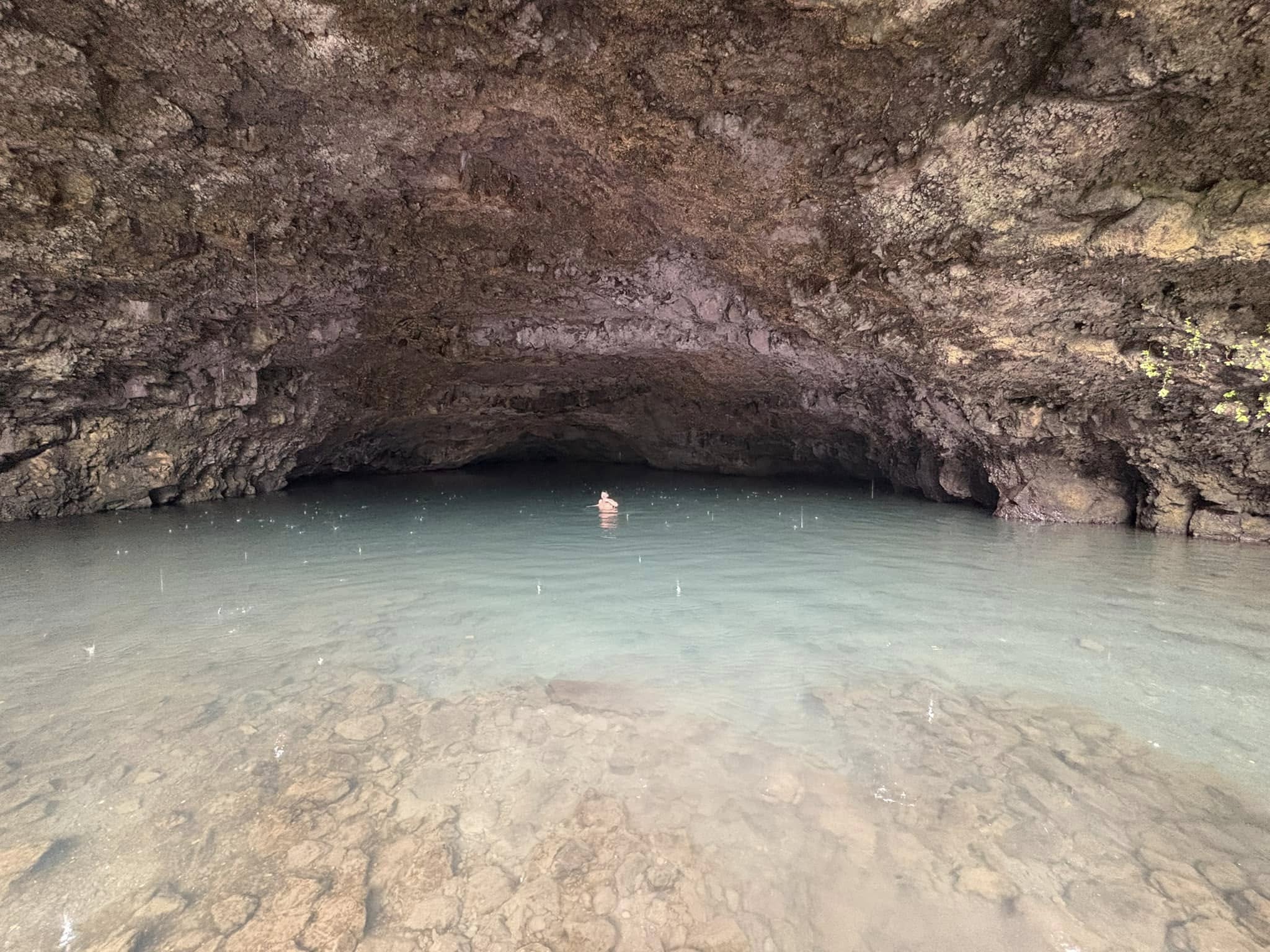
All in all, a very cool, quick stop. And best of all, it was free. You just have to like chickens.
2. Teahupo’o
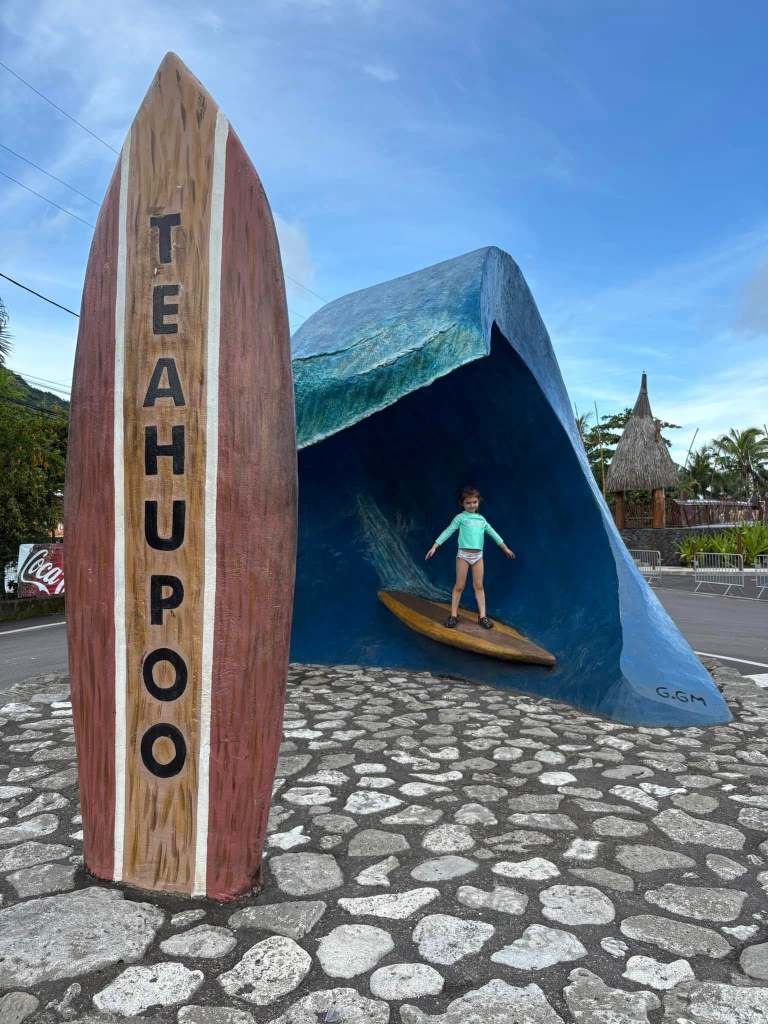
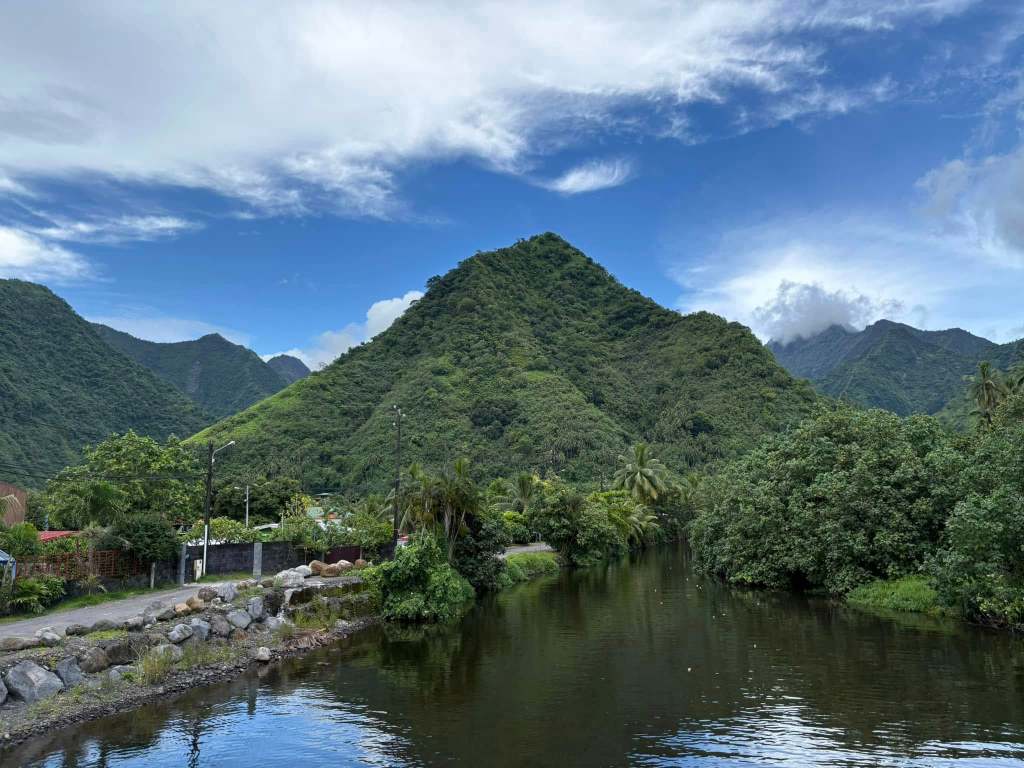
Teahupo’o is located at the very end of the road on Tahiti-iti (literally – the road just stops at a round-about and spits you back out the other way). This little surf town is located 75km, or about a 1.5 hour drive from Pape’ete. And if the name sounds familiar, that’s because it was big news last year – as the official surfing venue for the 2024 Paris summer Olympics. The waves at Teahupo’o are world renowned as some of the largest, heaviest, and most deadly in the world, not only due to their size, but the shallow coral reef positioned just below their breaking point.
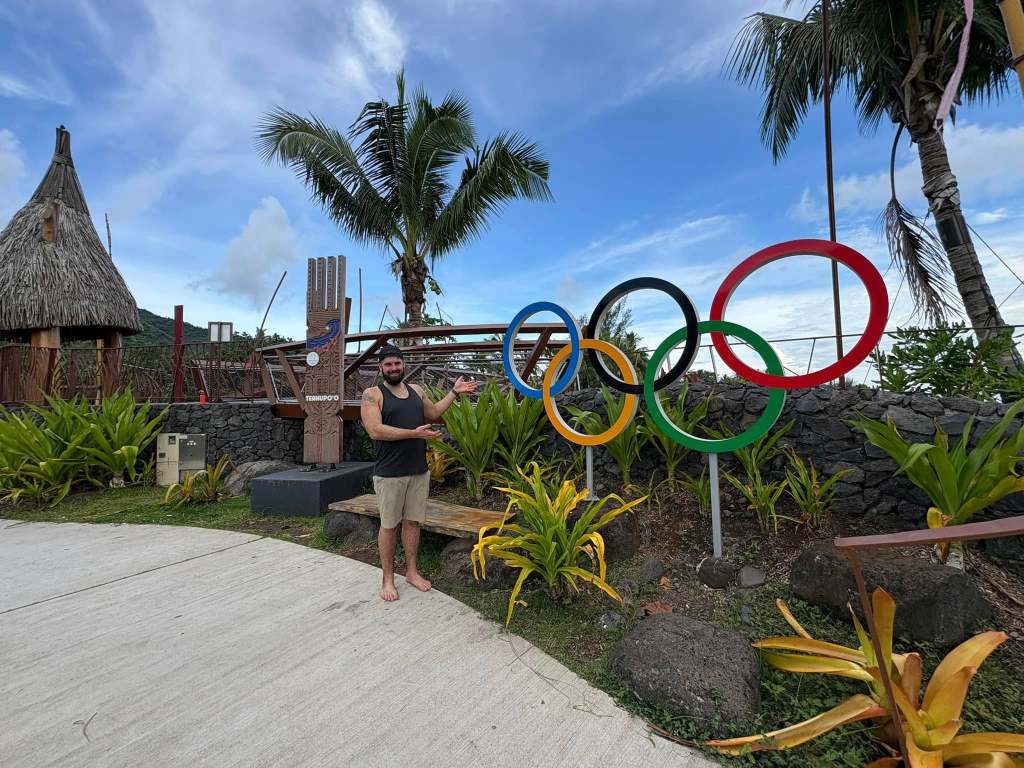
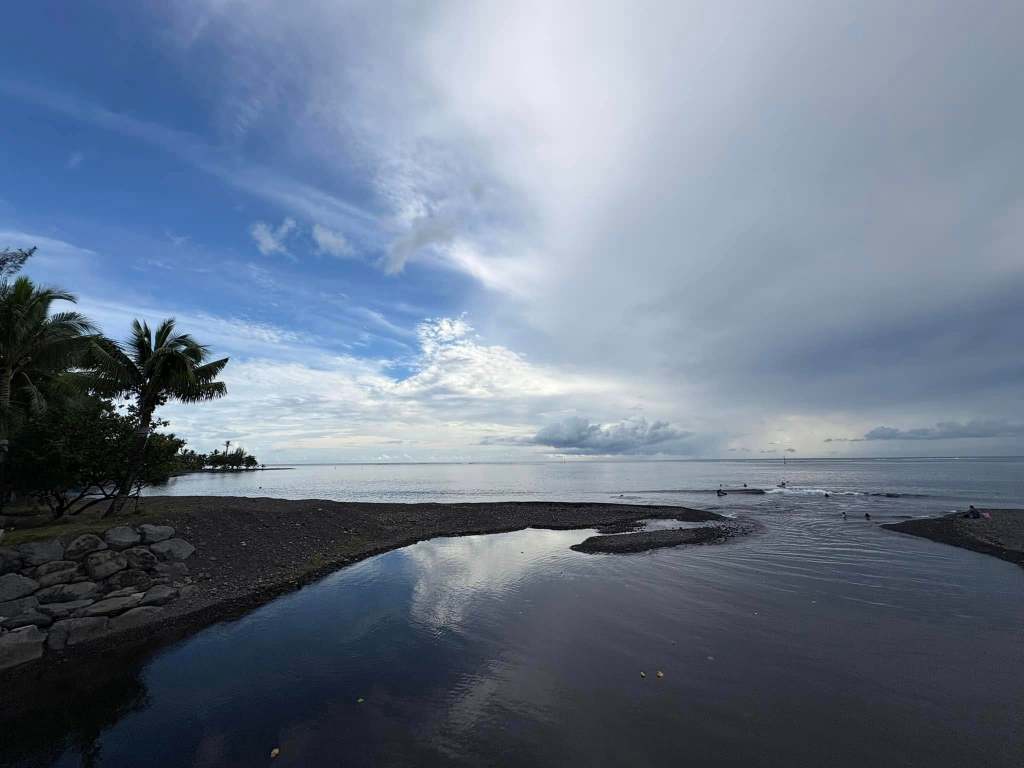
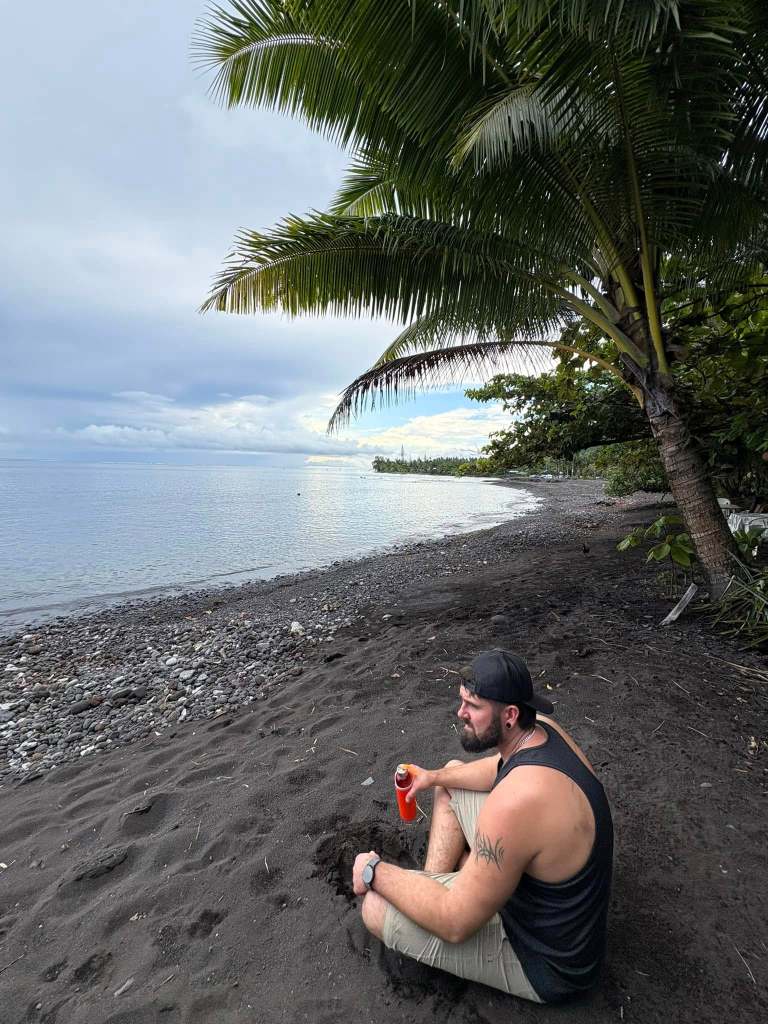
There was a large-ish gravel parking lot next to the round-about and a public beach where people hung out in truck-beds looking out towards the ocean, or in camp chairs with drinks in hand. It was a welcoming area of both locals and tourists. The waves break about 500m from shore, so the best way to see them is to hop in a boat and take a ride out. Since they were only coming in around 1m in height when we were there, we opted out of the boat ride and wandered around instead, taking in the Olympic rings that still stood in place, and a little walk along the coast. There’s a path that meanders out towards a point that’s a bit closer to where all the surfers gather in the water, but since we wanted to see more of the island, we opted to stop short and look from afar.
It was a cool photo spot and would be a great place to just camp out for the day (if you had time). The locals are chill, nobody harasses you (in fact, nobody in this country bothers you – instead, they look out for you), and there’s a little beach to wade and play on, with bathroom facilities on site (key!). Plus, with the Olympic rings looking down on you, it brings that bit of inspiration into your soul too.

3. Araahoaho Blowhole
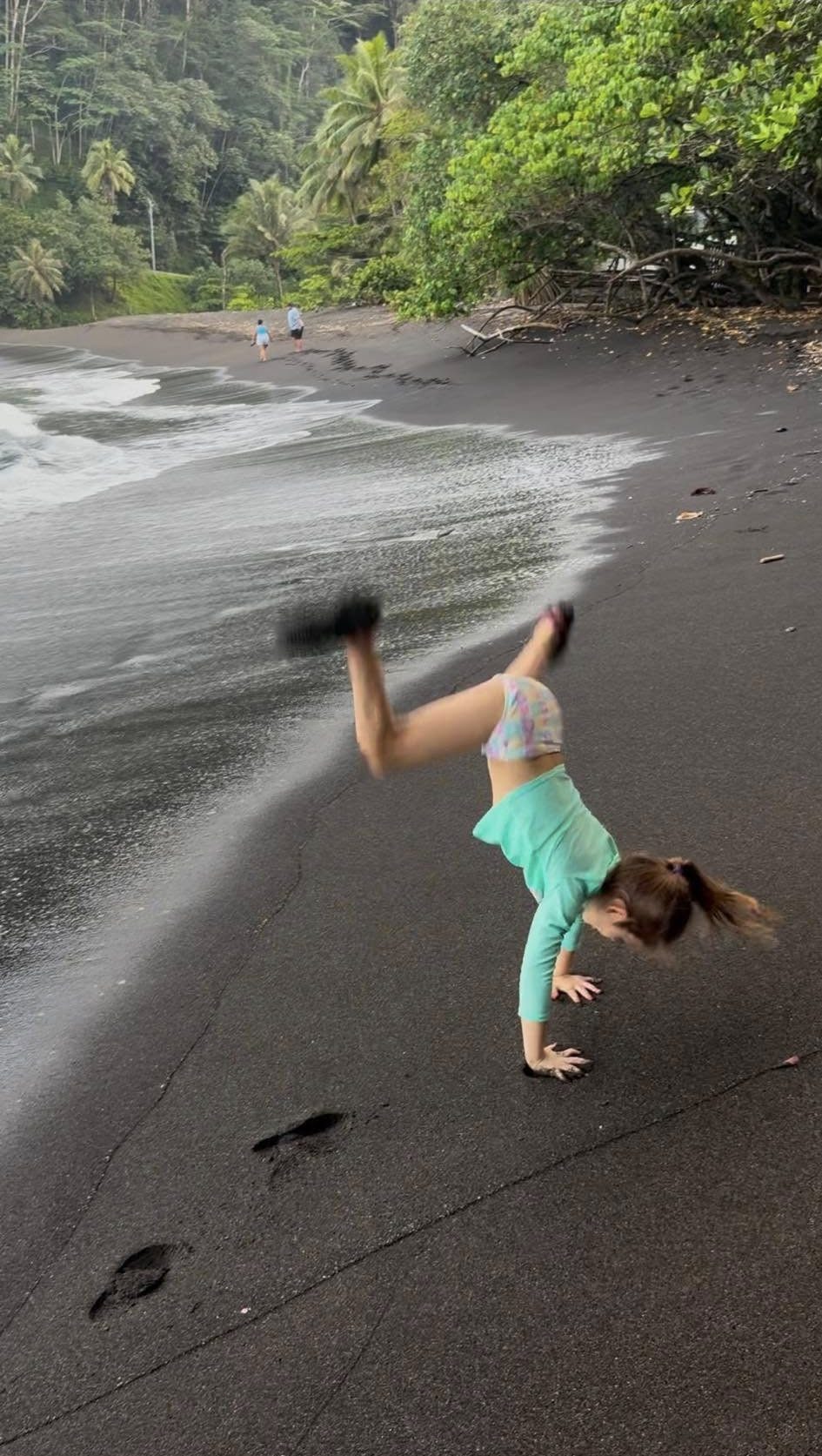
Blowholes are cool. They’re loud. They’re powerful. They’re a phenomenal natural wonder. But we never got to actually see Araahoaho. Sadly, it was closed for construction of the pathway around it. But why I do recommend going here is for the black sand beach adjacent to it. It was incredible. It’s located just before a tunnel (pretty sure the only mountain tunnel on the island), only 21km (30 minutes) east of Pape’ete. There’s a parking lot, bathroom facilities, tons of crabs in the rocks towards the blowhole, and a gorgeous, soft, black sand beach illuminated by the mist created by the waves crashing into shore.
You couldn’t swim here, due to the strong undertow, but you could play. And boy did M play. Things were buried into the sand, cartwheels were perfected, dance moves were performed, and I’ve never seen her so excited, and so covered in sand before. It was amazing. This is a must see, for sure. Just look at the photos, because I don’t think I could do it justice otherwise. Hell, even the photos don’t do it justice. Just go.
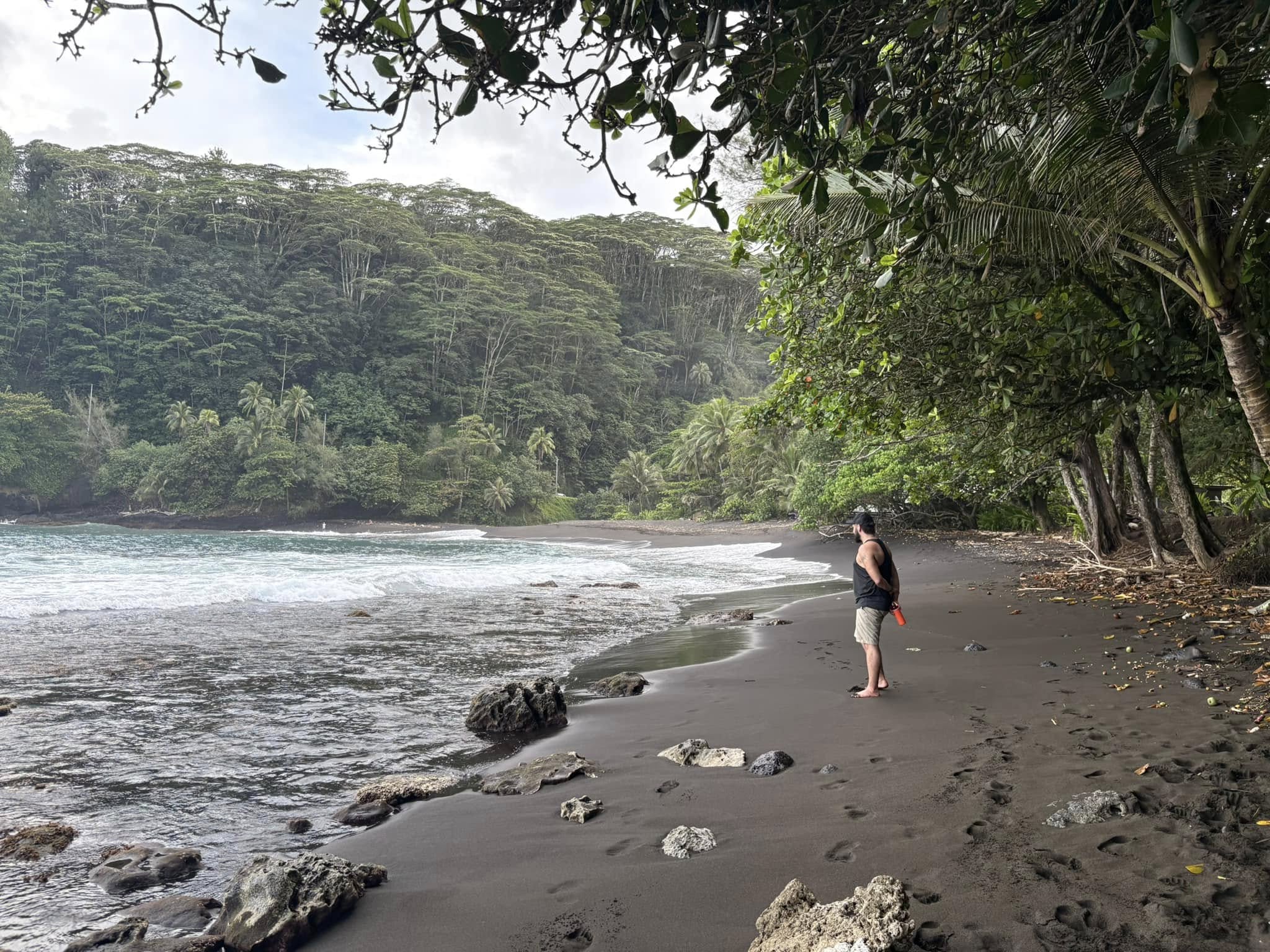
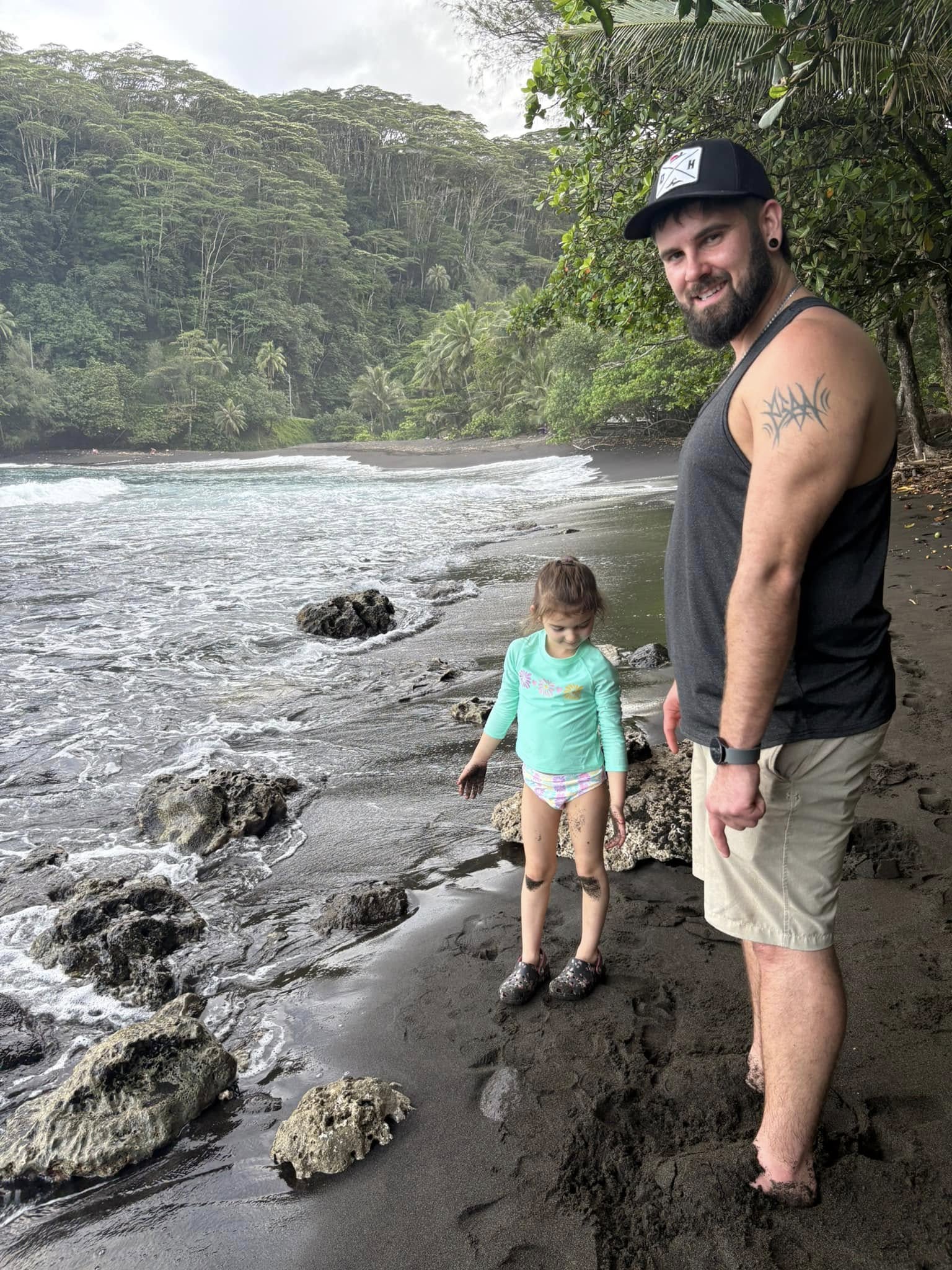
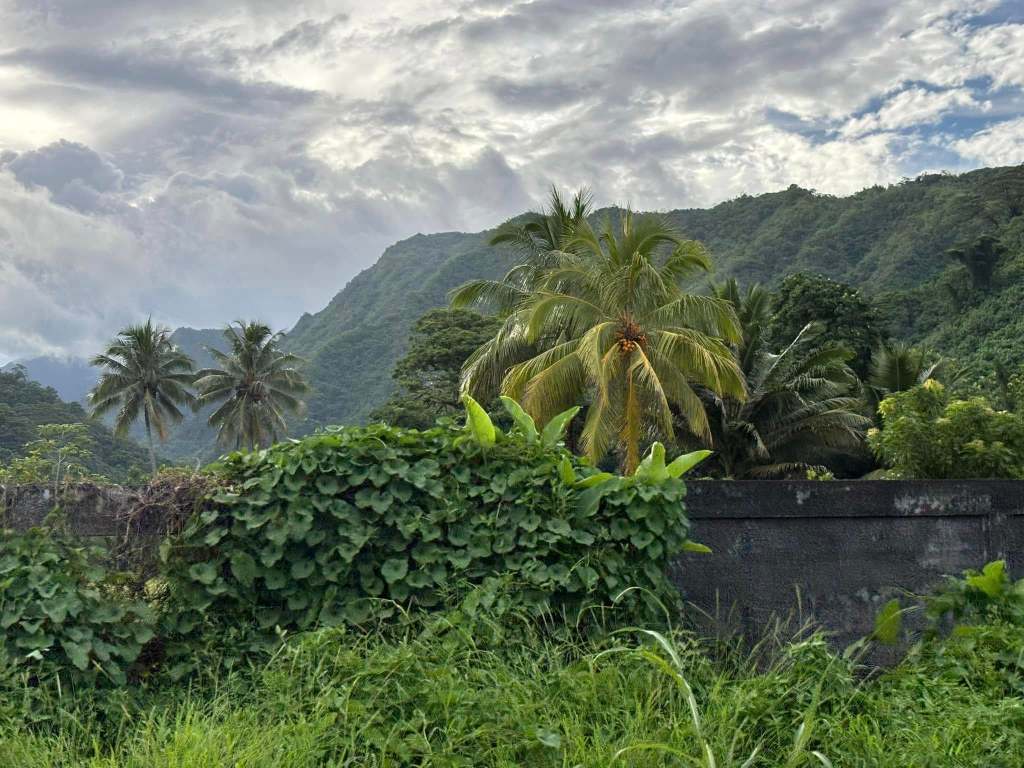
In fact, just go to Tahiti. But first…
Tips for the island of Tahiti-Nui and Tahiti-Iti
- DUTY FREE
If you plan on drinking, stop at the duty free in the airport and stock up on your allowances here. You can have 2 bottles of liquor and 2 bottles of wine, OR 4 bottles of wine and 1 bottle of champagne. It’s not cheap, per se, (a 26oz bottle of Captain Morgan’s was about $28 CDN), but if you wait and buy it in a grocery store, the prices is nearly doubled (and in some places tripled!) And in restaurants you’ll find beer for about $5-8 USD per can, or $15-20 USD per cocktail. So, no matter your preference, I suggest Duty Free.
2. RENT A CAR
Again, it’s not cheap – they charge you a daily rate plus 0.59 XPF per km (100 XPF = $1 USD), but it’s worth it. Tours are expensive and limiting. Public transport doesn’t take you everywhere (easily). And the freedom of being able to get out and explore on your own terms and your own time make it worthwhile. Especially with kids when you run on their schedule sometimes (naps and snacks are life, right?). We rented through HERTZ and had a good experience, but there’s also AVIS and some other local rental companies. One thing to note though, is that nearly all rental cars are standard. We heard rumours that a handful of automatics were available if you book well in advance, but didn’t see anything to confirm their actual existence.
3. DON’T STRESS ABOUT CASH
VISA seemed to be accepted almost everywhere here. In fact, we didn’t use cash once on the island of Tahiti. Local currency is XPF (CFP Francs or Collectivités françaises du Pacifique Francs) and can easily be taken out at local banks (ATMs are not very prevalent other than at banks). So, don’t worry about having cash on hand prior to arrival, and definitely don’t try to use USD. It’s not accepted (In fact, we were politely laughed at on the one occasion we tried.)
 Teryn Warnke
Leave a comment